With White Label You Share the Formula, With Private Label You Own It
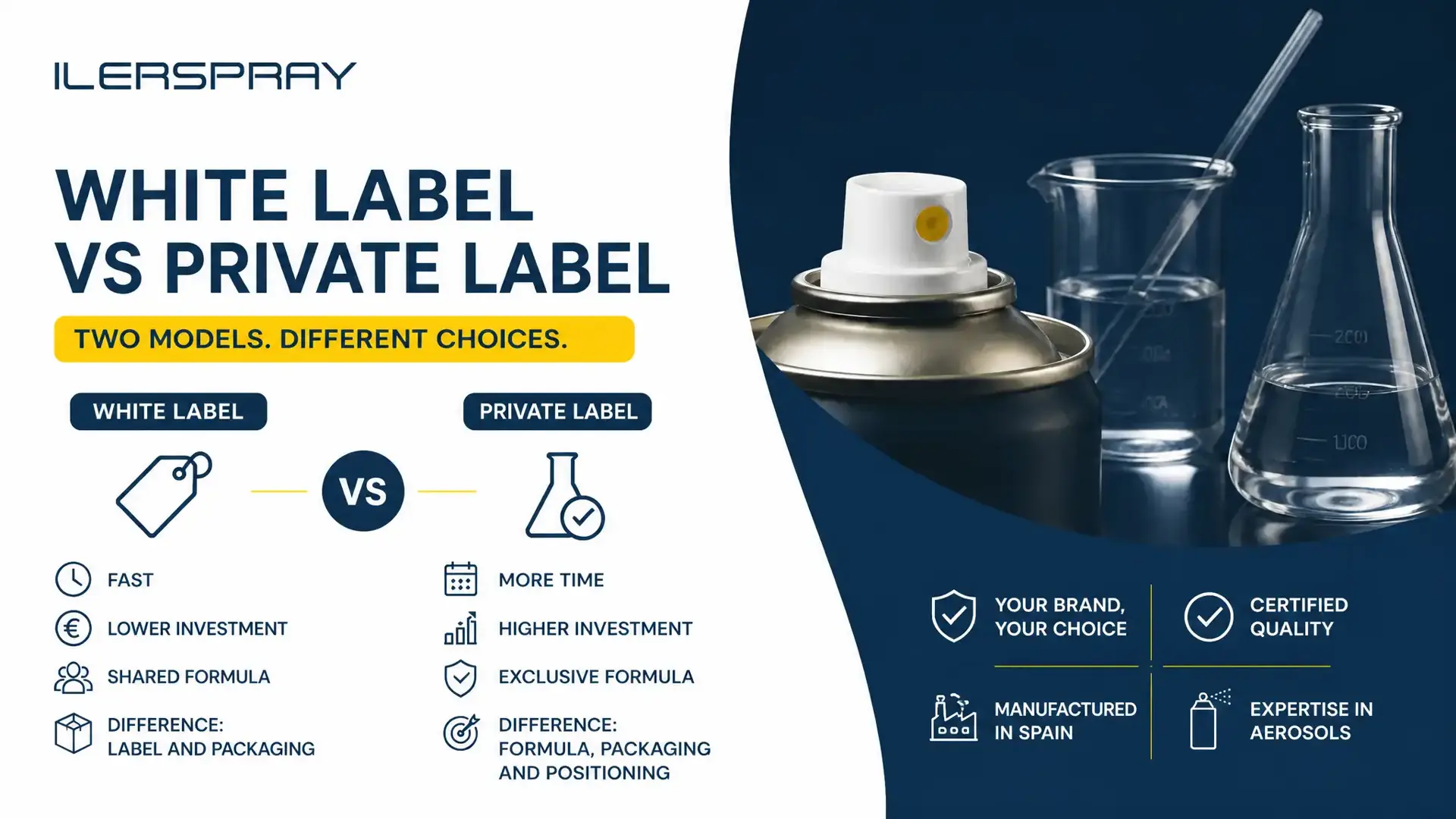
In manufacturing, white label is a formula the manufacturer already has and sells to several brands, which only change the label; private label is a formula developed exclusively for your brand, one no competitor can order from the same plant. The first reaches the market sooner; the second differentiates the product, not just the packaging.
Why Does "Marca Blanca" Mean Something Else in Spain?
In Spanish retail, "marca blanca" (literally white label) is used for any product sold under the retailer's brand. An article in the journal Distribución y Consumo, published by the state-owned Mercasa, explains that the name dates from 1977, when the Simago chain launched products in white packaging, and that the technical term is retailer brand (MDD in Spanish).
So when you talk to a manufacturer, keep two questions apart: which brand the product is sold under, which is always yours, and who owns the formula. The second is what separates white label from private label.
The Differences Between the Two Models, Point by Point
The underlying difference is formula ownership. Everything else (lead time, differentiation, who else can buy the product) follows from it.
| White label | Private label | |
|---|---|---|
| Formula ownership | The manufacturer | Your brand |
| Exclusivity | Shared with other brands | Yours only |
| Development | Short, the formula exists | Longer, bespoke formula |
| Differentiation | Label and packaging | The product too |
| Best for | Launching fast, extending a range | Building a brand, own product |
Contract manufacturing is the broader concept. It can work with either model and can even produce a formula supplied by the client.
Which Model Fits Your Brand?
The deciding question is not lead time but defensibility: if a competitor can order the same product from the same manufacturer tomorrow, your edge rests entirely on packaging and marketing.
White label suits anyone who needs to move fast or add a category without developing a formula, such as a distributor adding an aerosol degreaser to its catalogue or a chain launching a household line. Private label suits brands that compete on formulation or claim a benefit of their own: a cosmetics brand with a skin spray, a workshop building its maintenance range or an industrial supplier with a specification tied to its standards.
💡 Formulator's note: ask in writing who owns the formula before the first batch. If the manufacturer owns it, it is white label even if the label and the can are exclusive.
What Changes When an Aerosol Is Made Under Each Model?
The manufacturing process is the same in both: filling the can, crimping the valve, injecting the propellant and passing the leak test. What changes is who designed the liquid inside.
In private label, the formula is developed against a specific brief (an active ingredient, a viscosity, a performance target) and validated with samples before the first batch. In cosmetics, who answers for the product matters as well: Spain's medicines agency, AEMPS, notes that whoever markets a cosmetic under their own name or trademark is treated as its manufacturer even if they do not make it, and that production must follow good manufacturing practice.
The reference standard for that practice is ISO 22716, certified at Ilerspray's plant, which can also act as the cosmetic's responsible person under a written mandate from the brand.
Ilerspray formulates to measure or adapts the formula you already have, and fills it under your brand in aluminium or tinplate from 50 to 750 ml, with flexible batches and an average lead time of 6 to 10 weeks. You can set out your project through its aerosol contract manufacturing service.