Aerosol Can Manufacturing: The Engineering of the Perfect Container
Aerosol cans represent one of the greatest innovations in the packaging world. According to AEROBAL, 5.8 billion cans were produced worldwide in 2019, with the personal care sector leading the demand. These engineering masterpieces must withstand pressures of 2-8 bar while maintaining minimum weight and maximum strength.
In Spain, approximately 65% of cans are made of tinplate and 35% of aluminum, according to industry manufacturer statistics. This distribution reflects the specific needs of different industrial and commercial applications.
What materials are used in aerosol can manufacturing?
The choice of material is crucial for the final performance of the product. Aluminum is projected to grow at a CAGR of 5.5% and is expected to reach over 16 billion dollars by 2034, mainly due to its superior recyclability and corrosion resistance properties.
As an engineer from thyssenkrupp Rasselstein explains:
The bottom domes and top cones of aerosol cans stand out for their excellent forming properties and their ability to apply homogeneous varnishes and prints
The quality and homogeneity of the material are essential to ensure the durability and safety of the container.
Aluminum Can Production Process
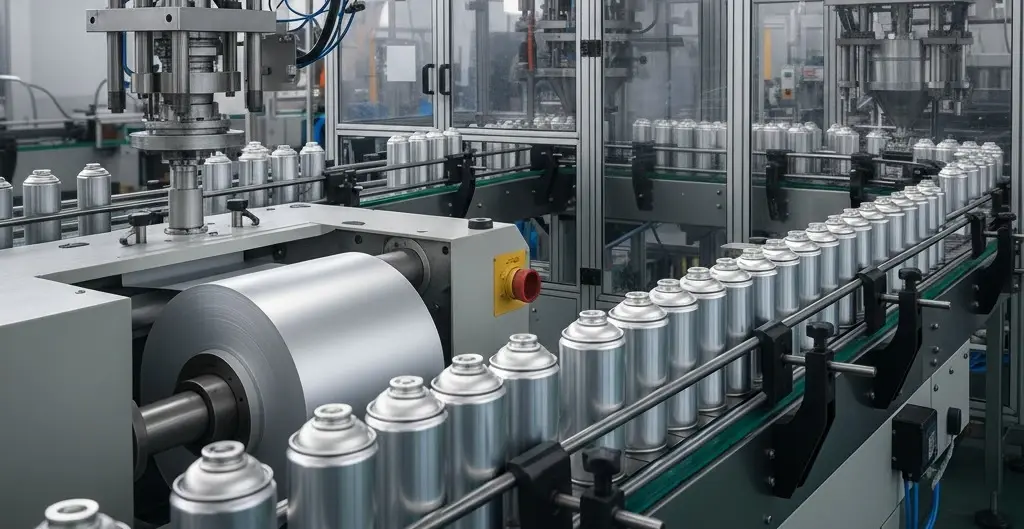
Aluminum can manufacturing is a fascinating process that combines technical precision and industrial speed. The process begins with impact extrusion, where a 3000 series aluminum alloy slug is placed in a specialized hydraulic press.
A ram punches the center, creating a deep cylinder in a single operation. This process allows speeds of up to 180 strokes per minute, according to current industrial standards. Advanced technology uses more than 30 different extruder nozzles to achieve the exact geometry, ensuring each can has the precise specifications required.
Forming and necking is the next critical stage. The cylinder passes through multiple stations where the diameter is adjusted and the shoulder profile is created. This phase determines the functionality and final aesthetics of the product.
Heat treatment completes the main process. The cans pass through controlled ovens to cure internal lacquers and external coatings. The temperature must be maintained between 180-220°C for specific times to guarantee optimal adhesion and durability.
How are tinplate cans manufactured?
Three-piece cans dominate the technical and industrial market due to their versatility and strength. The process begins by cutting sheets of tin-plated steel that are formed cylindrically and welded with millimeter precision.
The bottoms and tops are stamped separately in specialized presses and joined by double seaming, a process that guarantees absolute airtightness. This traditional method remains preferred for applications requiring maximum resistance to high pressures.
A relevant technical fact: a typical aerosol can weighs between 45-85 grams but can withstand internal pressures of up to 12 bar, demonstrating the efficiency of engineering design.
Coating and Protection Systems
Protective coatings and lacquers are critical elements that determine the chemical compatibility and durability of the container. Internal lacquers prevent corrosion and reactions between the product and the metal.
Epoxy-phenolic lacquers are standard for aqueous products, while polyester lacquers are used for aggressive solvents. The typical thickness is 5-15 microns applied by electrostatic spraying, a process that ensures uniform coverage and superior adhesion.
There is a wide variety of materials available for each type of application, including galvanized, special chrome-plated, tin-free, varnished, and polymer-coated options. This diversity allows manufacturers to select the optimal material for specific needs.
Decoration and Printing: Art and Functionality
Offset printing allows up to 6 colors with photographic quality, transforming cans into true works of commercial art. The inks must be compatible with subsequent filling processes and resist internal pressure without deteriorating.
The final varnish protects the decoration and provides the desired finish: matte, glossy, or textured. This final layer is not only aesthetic but also contributes to the protection of the contents and the durability of the container.
How much does it cost to manufacture aerosol cans in Spain?
Manufacturing costs in Spain vary significantly depending on the material, size, and complexity of the design. According to industry data, the Spanish market is characterized by very tight commercial margins and a supply generally greater than demand.
The fragmentation of industrial plants is common due to the great influence of transport costs on the final price. Since it is high-volume, low-weight merchandise, it is difficult to compete for supplies over long distances.
Technological Innovations and Sustainability
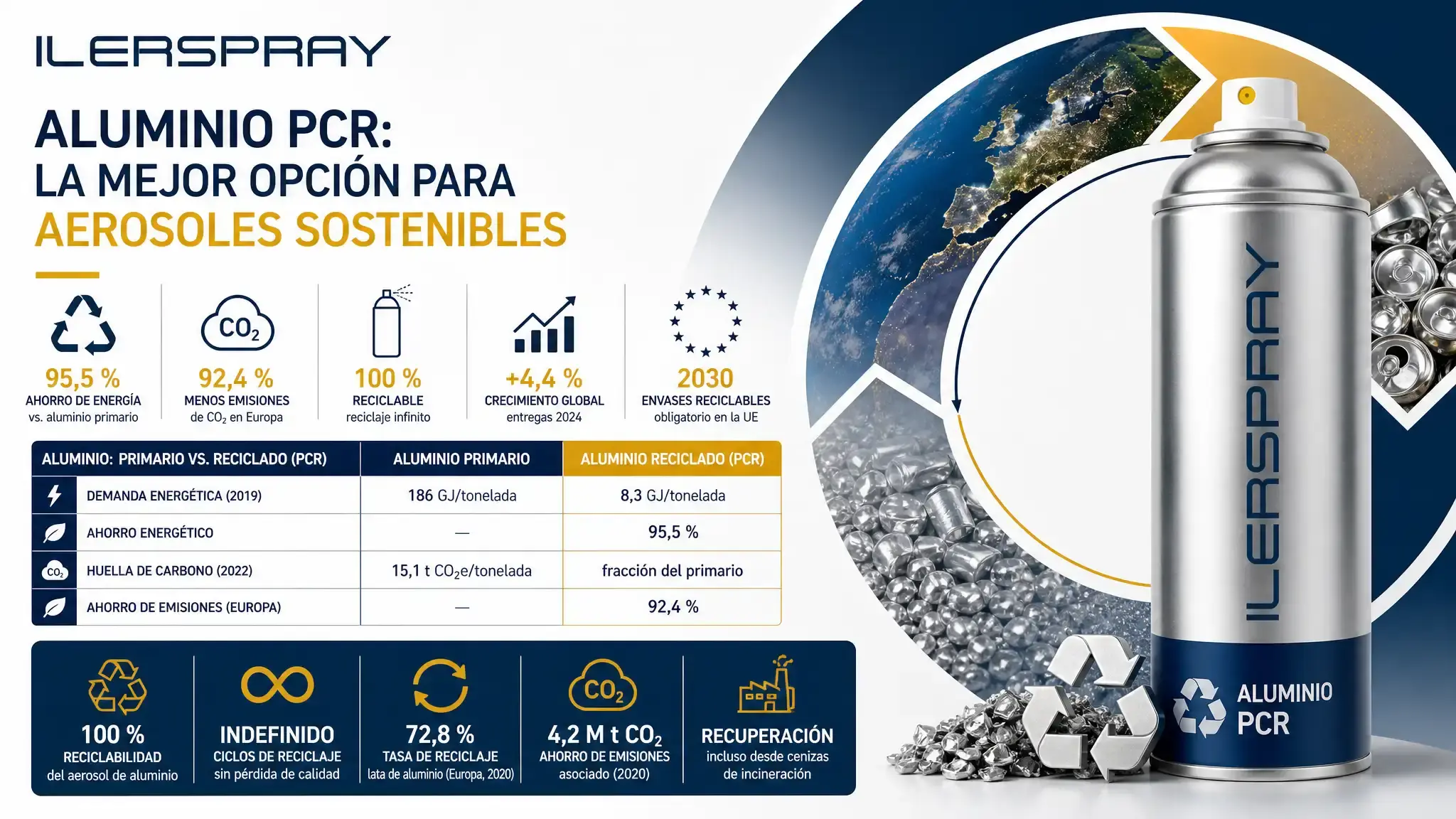
Approximately 25% of the total aluminum supply in Europe comes from recycled scrap, and the personal care can industry uses recycled material. Sustainability has become a critical factor influencing manufacturing decisions.
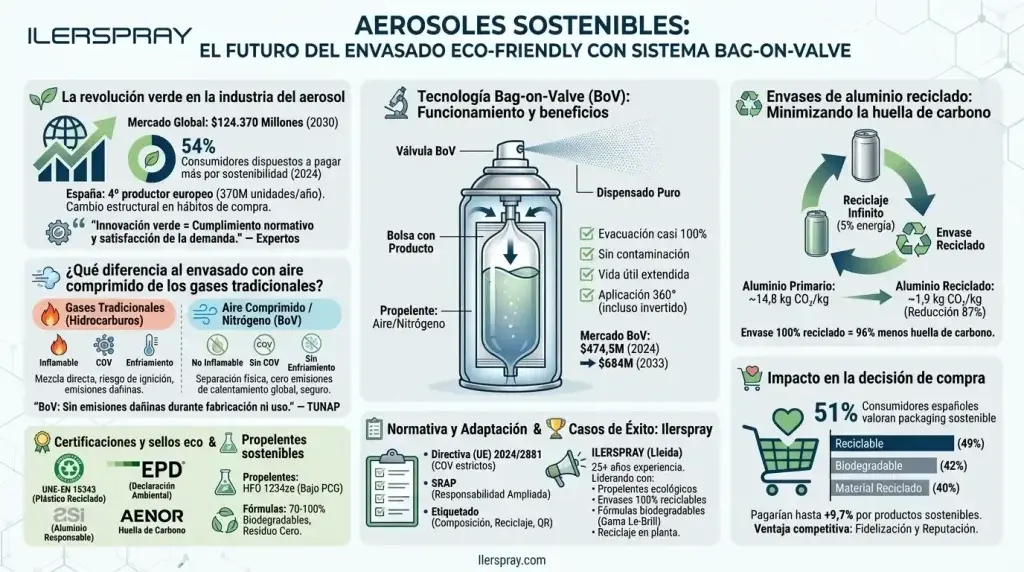
Recent innovations include anti-clogging valve systems and 360-degree dispensing, which significantly improve end-user functionality. The finite element method (FEM) allows for testing the feasibility and safety of new geometries before their practical implementation.
Global Market Outlook
The global aerosol can market was valued at 11.5 billion dollars in 2024 and is estimated to grow at a CAGR of 5.2% from 2025 to 2034. Growth is driven by the increasing demand for convenient and efficient packaging solutions.
In Spain, aerosol production reached approximately 1.2 billion units in 2018, positioning the country as the fourth largest producer of aerosols in Europe. The categories of personal care, household products, and insecticides accounted for more than 80% of total production.
Quality Control and Regulations
Manufacturers must comply with strict European and international regulations. Spanish companies like Romar Global Care operate under global standards such as ISO 14001 and use recyclable materials and certified suppliers.
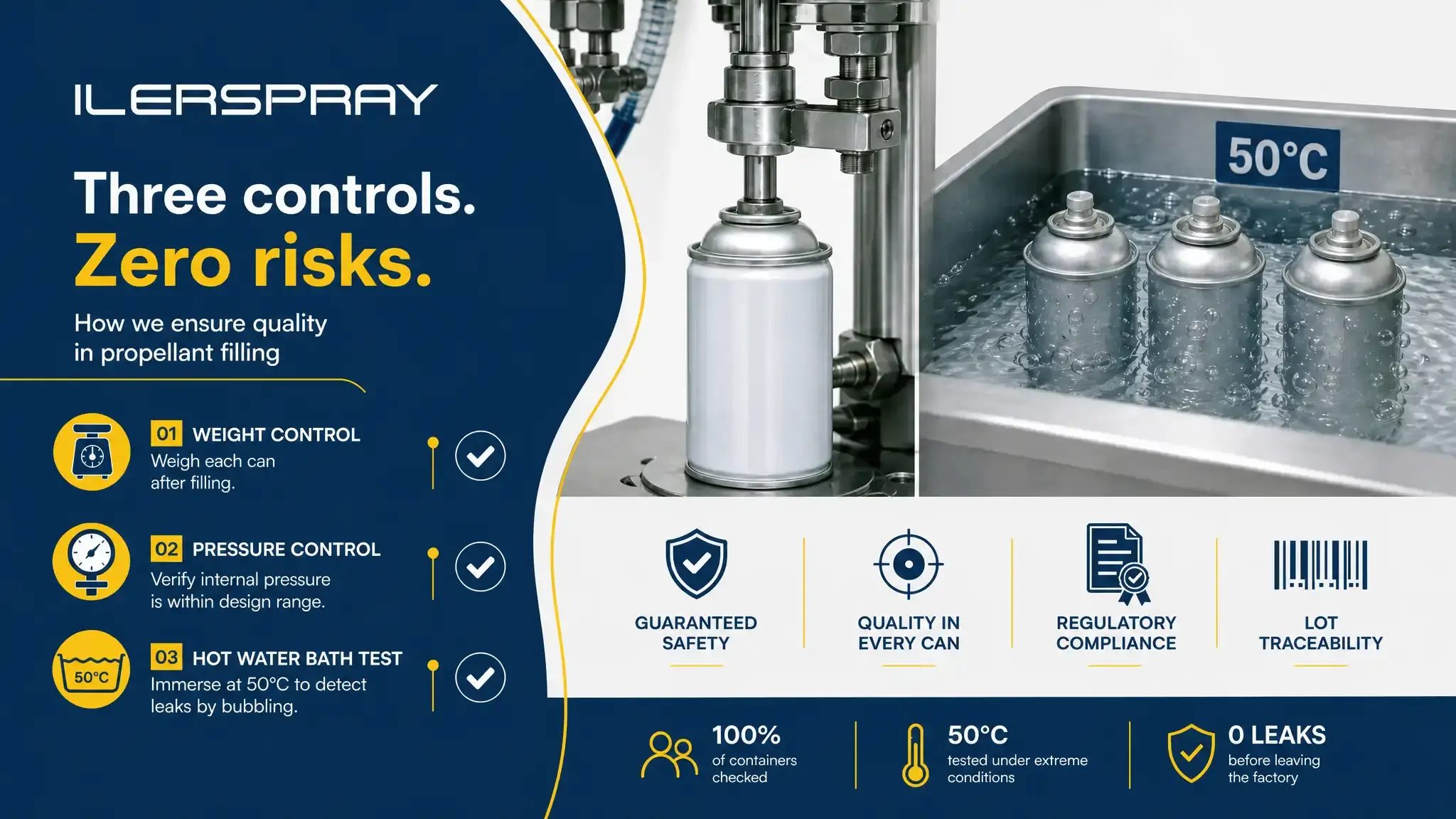
Quality control ranges from the selection of raw materials to final pressure testing. Each batch must pass rigorous tests for airtightness, pressure resistance, and chemical compatibility before being released to the market.
The Importance of Choosing the Right Manufacturer
The aerosol manufacturing process represents a perfect synthesis between precision engineering and mass production, in which cans are only one stage of a long process. From aluminum slugs to the final decorated product, each step requires technical expertise and rigorous control to create containers that protect, preserve, and present products with maximum efficiency.
Selecting an experienced manufacturer is crucial for the success of the final product. Factors such as experience, innovation capacity, and regulatory compliance are essential. In the Spanish landscape, companies with decades of experience that combine tradition and innovation stand out.
Looking for a reliable partner for aerosol manufacturing? At Ilerspray, we combine more than 25 years of experience with cutting-edge technology to offer comprehensive solutions from formulation to packaging. Our commitment to quality, innovation, and sustainability positions us as the ideal choice for developing your aerosol project in the European market.