CLP Labeling for an Industrial Cleaning Aerosol
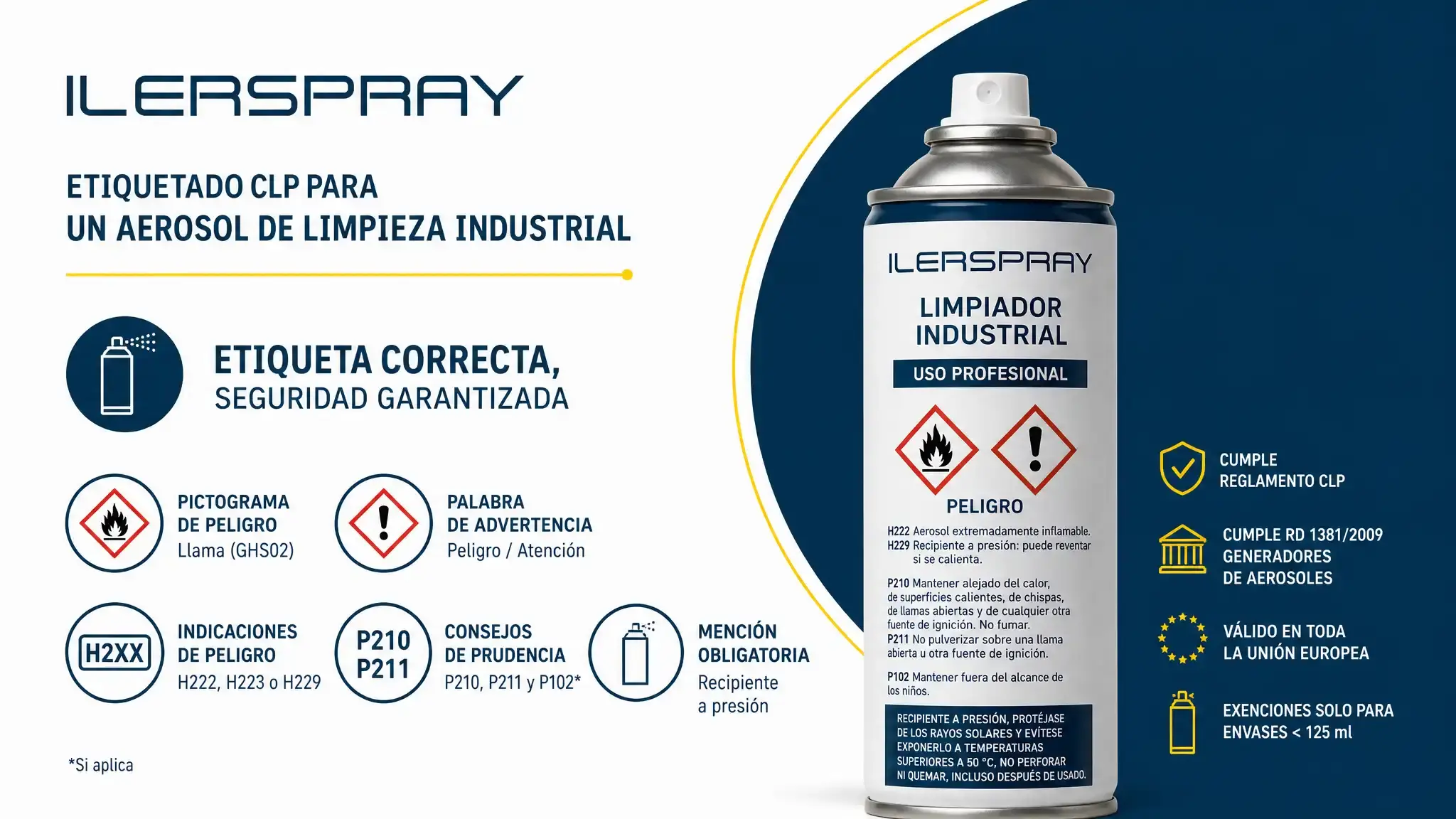
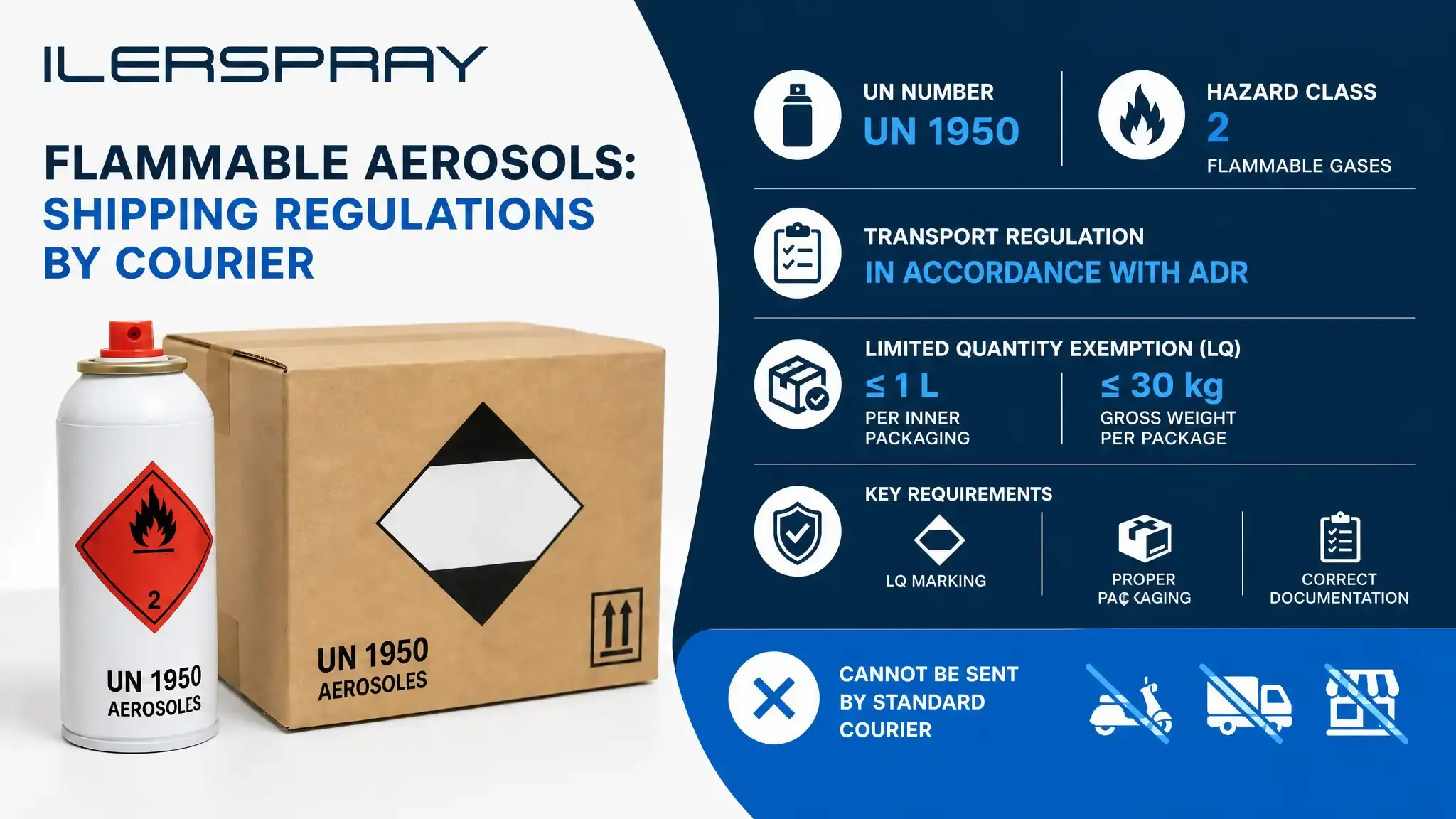
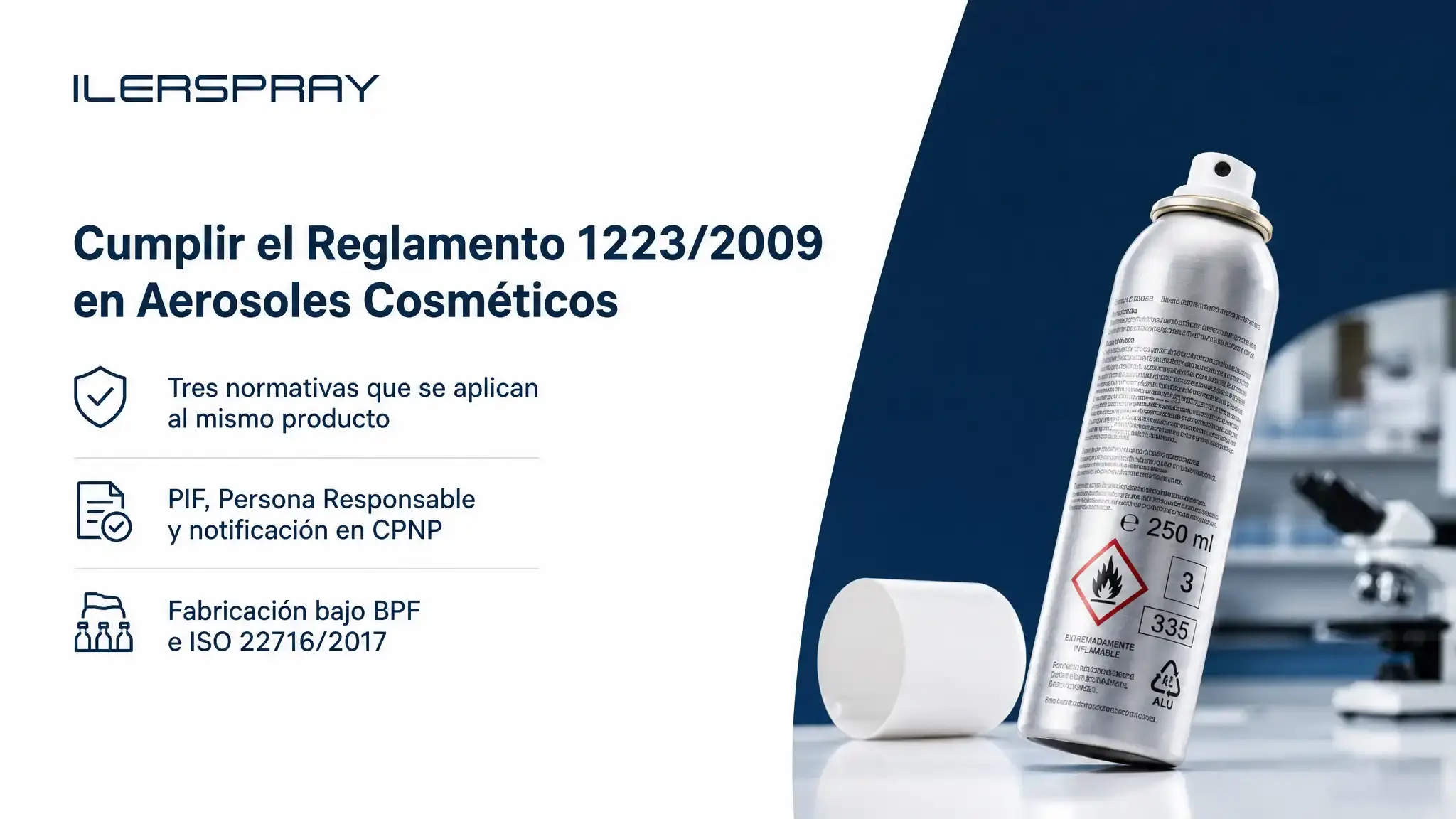
An industrial cleaning aerosol must include the flame pictogram on its label if it is flammable, the corresponding signal word, hazard statements H222, H223, or H229 depending on its category, precautionary statements P210 and P211, and the fixed mention of a pressurized container required by Spanish regulations on aerosol dispensers.
Which Regulations Govern Aerosol Labeling in the European Union
The starting point is Regulation (EC) No 1272/2008, known as the CLP Regulation, which harmonizes the classification, labeling, and packaging of hazardous substances and mixtures across the EU. Added to this are the specific regulations for aerosol dispensers, Directive 75/324/EEC, whose labeling provisions were adapted to CLP via Directive 2013/10/EU.
In Spain, this directive is transposed through Real Decreto 1381/2009, which sets the manufacturing and marketing requirements for aerosol dispensers, including mandatory markings on the container. An industrial aerosol sold in any Member State must comply with both regulatory bodies simultaneously: CLP for hazard classification and the aerosol regulation for specific inscriptions regarding the pressurized container.
Which Elements Must Physically Appear on the Label
According to the European Chemicals Agency (ECHA), the label must be firmly attached to one or more surfaces of the packaging and include the name, address, and telephone number of the supplier, as well as the nominal quantity of the contents when it does not already appear elsewhere on the packaging. To this are added, where applicable, hazard pictograms, the signal word, hazard statements, precautionary statements, and supplementary information required by additional legislation.
- Supplier identification
- name, address, and telephone number
- Nominal quantity
- if not already on the container
- Hazard pictogram
- flame (GHS02) if flammable
- Signal word
- Danger or Warning depending on category
- Hazard statements
- H222, H223, or H229
- Precautionary statements
- P210, P211, and P102 if applicable
Which Pictogram and Signal Word Correspond to a Flammable Aerosol
The CLP Regulation classifies aerosols into three flammability categories. The technical portal Quimi-Reach summarizes that for aerosols classified in categories 1 and 2 (flammable), specific hazard statements must be added: category 1 carries H222, extremely flammable aerosol, and category 2 carries H223, flammable aerosol. The signal word follows the same logic: "Danger" for category 1 aerosols and "Warning" for category 2.
When the product falls into either of these two categories, the mandatory pictogram is the flame on a white background with a red frame (GHS02). A solvent-based industrial cleaning aerosol usually falls into category 1 or 2, while aqueous formulations or those with non-flammable propellants may be classified as non-flammable and be exempt from this pictogram.
Which Hazard and Precautionary Statements Are Mandatory Regardless of Flammability
Every aerosol dispenser, whether flammable or not, carries a common hazard statement simply because it is a pressurized container. According to Quimi-Reach, H229 warns that the pressurized container may burst if heated, a phrase that is always accompanied by precautionary statement P210 (keep away from heat) and, in flammable products, by P211, which indicates not to spray on an open flame or other ignition source.
If the industrial aerosol could reach consumers and not just professional personnel, another requirement is added: an additional precaution is required on the label, P102, keep out of reach of children.
💡 Technical tip: review the flammability classification with the actual heat of combustion of the mixture before fixing the pictogram, because a change in solvent or propellant supplier can shift the product category without changing its appearance or use.
Which Fixed Mentions Are Required by Spanish Regulations for Aerosol Dispensers
Apart from CLP, Real Decreto 1381/2009 imposes mentions specific to the aerosol format that do not depend on hazard classification. The text establishes that every aerosol dispenser must bear in a visible, legible, and indelible manner, whatever its contents, the mention "pressurized container: protect from sunlight and do not expose to temperatures exceeding 50 ºC. Do not pierce or burn, even after use." This phrase is mandatory on all packaging, flammable or not.
When the aerosol is classified as flammable or extremely flammable, the same royal decree also requires the flame symbol according to the model established in the regulations for the classification and labeling of dangerous substances, thus reinforcing what the CLP Regulation already imposes.
Are There Exemptions Based on Container Size?
The CLP Regulation provides a margin for simplification for small packaging. According to ECHA, some exemptions apply, for example, to substances and mixtures contained in small-sized packaging, usually less than 125 ml, or those difficult to label for some other reason. In industrial practice, most professional cleaning aerosols exceed this threshold, so they must carry full labeling without reduction of elements.
When Does Labeling Change if the Aerosol Is Exported to Another EU Country?
CLP labeling is harmonized throughout the European Union, so hazard classification and pictograms do not change from one country to another. What does vary is the language: each Member State requires that hazard statements, precautionary statements, and aerosol dispenser mentions appear in its official language or languages, which necessitates producing different label versions depending on the target market even if the formula and classification are identical.
Complying accurately with every H-statement, pictogram, and fixed mention on the container requires accumulated experience in aerosol manufacturing and the regulations governing them. If you have questions about how to label a specific industrial cleaning aerosol based on its formula and target market, you can resolve them by speaking with the site assistant, who will guide you based on your case.