Aerosol Cosmetics: An Expanding Market Driven by Innovation and Sustainability
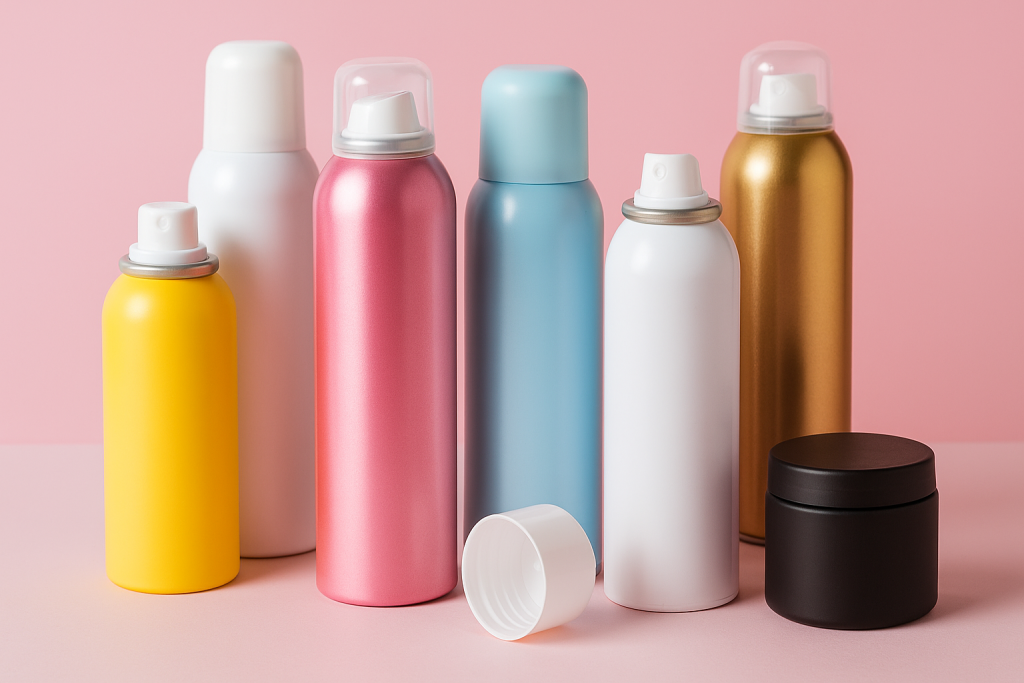
The aerosol cosmetics industry has experienced notable growth in recent years, driven by the demand for practical products, precise application, and novel sensory experiences. The global aerosol market is estimated to reach a value of 124.37 billion dollars by 2030, with a compound annual growth rate (CAGR) of 6.10%. This boom is due, in part, to the increase in consumer purchasing power and their growing concern for personal care.
An Evolving Market
The aerosol cosmetics market is in an expansion phase, with a significant increase in global consumption. Latin America leads the production of these products, and positive growth is observed in various segments such as fragrances, color cosmetics, skin care, and hair care.
The size of the aerosol can market, in terms of shipment volume, is projected to increase from 19.12 billion units in 2024 to 22.31 billion units in 2029. Europe is positioned as a key market, driven by the use of aerosols in the deodorant and perfumery industry.
Technology and Manufacturing: Innovation at the Service of the Consumer
The manufacturing of aerosol cosmetics is a complex process involving various stages, from formulation to packaging. The containers, generally made of aluminum or tinplate, contain the cosmetic product and a propellant that allows its expulsion in the form of spray, foam, or mist. This type of packaging offers advantages such as total product consumption and a long shelf life.
The industry is constantly evolving, with innovations such as 360° packaging, Bag-on-Valve (BOV) systems, and the use of eco-friendly propellants. These technologies seek to improve efficiency, sustainability, and user experience, offering products with precise applications and refreshing effects.
The Future and Challenges: Personalization and Sustainability
The aerosol cosmetics market is constantly changing, with a growing demand for personal care products and a preference for easy-to-use products with precise applications. However, the industry faces challenges such as competition, environmental regulation, and the need to constantly innovate.
The sector is moving towards the development of smart aerosol dispensers, biodegradable packaging, and personalization through 3D printing. Augmented reality, virtual reality, and artificial intelligence will also play an important role in offering interactive and personalized experiences.
Main Manufacturers and Environmental Considerations
The market is dominated by large multinationals such as Beiersdorf, SC Johnson, and Estée Lauder, which invest in eco-friendly packaging and sustainable technologies. However, the production and use of aerosols have an environmental impact, mainly due to the emission of propellant gases and the generation of packaging waste.
The industry is adopting measures to reduce this impact, such as the use of eco-friendly propellants, recyclable packaging, and the development of sustainable formulas.
Regulation and Best Practices
The production of aerosol cosmetics is subject to regulations that vary by region. In the European Union, Regulation (EC) No. 1223/2009 establishes safety and labeling requirements, while in the United States, the FDA regulates these products. Manufacturers must follow best practices, such as quality control and regulatory compliance, to ensure the safety and quality of their products.
Conclusions
The aerosol cosmetics industry is a dynamic sector that must adapt to market demands and comply with environmental regulations. Innovation and sustainability are key to success in this competitive market.
In this context, Ilerspray, with its focus on innovation, quality, and sustainability, positions itself as a benchmark in the manufacturing of this type of aerosols in Spain. The company has demonstrated its ability to develop a wide range of products, using cutting-edge technologies and complying with the highest quality standards.
Its commitment to sustainability places it in a favorable position to face environmental challenges and satisfy the demands of a market increasingly aware of the impact of its consumption decisions. With its experience and strategic focus, Ilerspray has great potential for growth in the Spanish and international markets.
Sources used
Exposure to chemical agents in cosmetic products. BASEQUIM - INSST
What are cosmetic forms and their active ingredients? - Inesem
List of ingredients to avoid in your cosmetics - Saper
Aerosols: what should you know about them? - PCC Group Product Portal
Exposure to chemical agents in hair treatments. BASEQUIM - INSST-