How to Ensure Quality in Propellant Injection
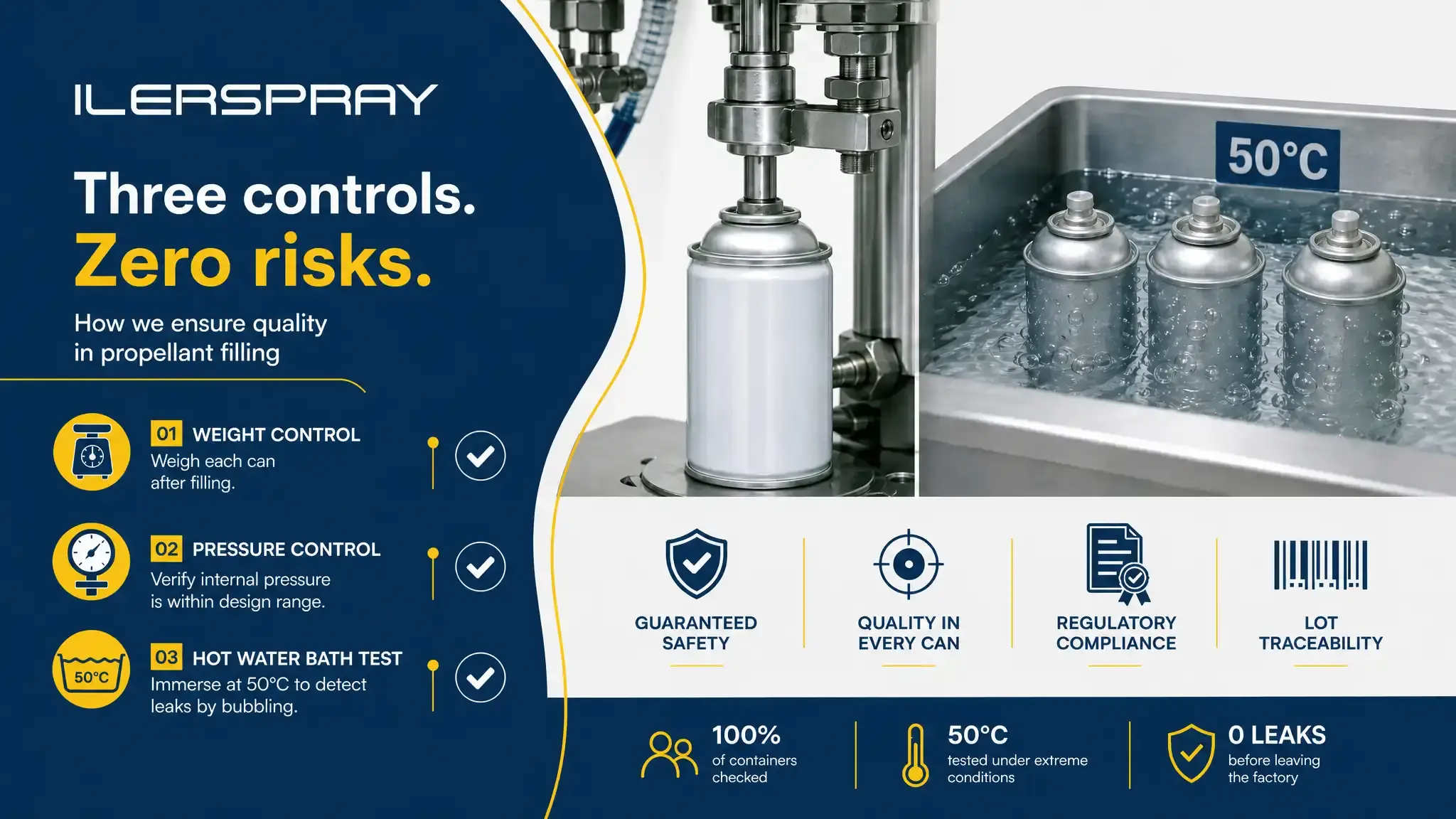
Propellant injection quality is guaranteed through three linked controls: weighing each container after gas loading to verify the exact dose, checking internal pressure against the design value, and finally, a 50°C hot water bath that detects leaks through bubbling before the batch leaves the factory.
Three Controls Secure Propellant Injection
The aerosol manufacturing process involves loading the active product without propellant into the empty container, sealing the valve, and only then injecting the propellant gas through the already mounted valve. It is at this point, and not before, where most defects can appear: an incorrect dose, a poorly seated valve, or a microscopic leak that only manifests under pressure and heat.
Therefore, control is not limited to "adding gas": it is structured into three successive verifications.
- Weight control
- weighing each container after injection, compared against the theoretical weight of the formula plus propellant
- Pressure control
- verification that the internal pressure matches the design range of the container and valve
- Hot water bath
- immersion at 50°C to force gas expansion and detect leaks through bubbling
Each of these steps covers a different failure. Weighing detects miscalculated doses, pressure control detects defective valves or out-of-specification containers, and the water bath is the only one of the three that reproduces real transport and storage conditions before the product reaches the market.
Why the Hot Water Bath Is the Decisive Test?
Because it is the only verification that subjects the already closed container to a more demanding condition than it will encounter in real life, and it does so for 100% of production, not just a sample. Submerging the aerosol in 50°C water raises the internal gas pressure and makes any leak in the valve, the seal, or the container body visible through bubbling.
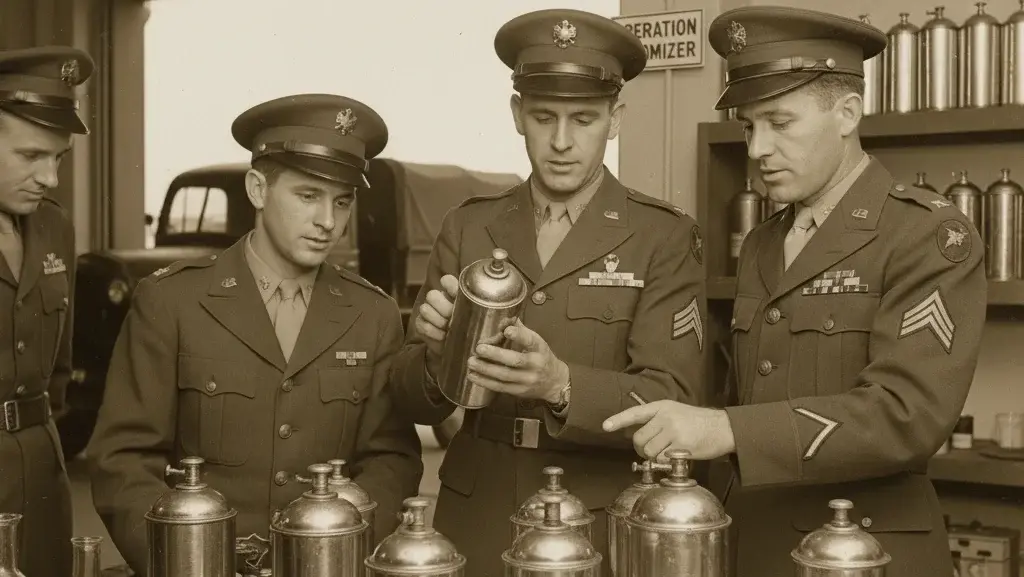
This practice is not a quality whim: it responds to the fact that, during transport and distribution, research from the 1940s found that the temperature of aerosol pallets can rise to about 50°C in hot climates. The hot water bath was designed specifically to reproduce that extreme scenario before the container leaves the factory, ensuring no aerosol bursts after leaving the filling plant.
The regulatory requirement behind this test is not voluntary: the European regulation governing aerosol dispensers, Directive 75/324/EEC, precisely defines the concepts of test pressure and bursting pressure used as references for accepting or rejecting a batch. Test pressure is the pressure to which the empty aerosol dispenser container can be subjected for 25 seconds without leaks or visible and permanent deformations occurring in the container.
💡 Technical tip: a container that passes weight control but fails the water bath almost always indicates a valve sealing problem, not a dosing issue. Isolate the batch and check the sealing head adjustment before continuing production.
What Happens if a Container Fails Any of These Controls?
The container is removed from the line and does not reach the customer. A weight failure indicates an incorrect propellant dose, which directly affects the spray rate and the product's shelf life once opened. A pressure or leak failure in the water bath indicates a real safety risk, as the container operates with pressurized gas throughout its entire life cycle, from manufacturing to final consumption.
None of the three controls is optional or replaceable by the other two: each detects a different and complementary failure mode.
Batch Traceability Provides a Fourth Level of Control
In addition to the three physical controls, professional manufacturing maintains full traceability of the propellant batch and the container batch used in each production run. This allows for locating, in the event of a claim, exactly which units share the same raw material origin and isolating the issue without needing to recall an entire period's production.
This traceability is supported by certified quality management systems, which document every stage of the process (formulation, filling, injection, weight control, water bath) and allow for auditing the complete history of a specific batch at any time after its manufacture.