Guide to Spray Manufacturers in Europe: Ranking and Selection 2026

🌍 1. Current landscape of the aerosol industry in Europe
Europe is the world's leading region in aerosol manufacturing. The European aerosol market was valued at 30.2 billion dollars in 2023 and is expected to reach 48.8 billion by 2030, with a compound annual growth rate (CAGR) of 7.1%, according to data from Grand View Research.
In 2024, Europe accounted for more than 36% of global aerosol production, with countries like Germany, France, the United Kingdom, Italy, and Spain as the main industrial drivers. The European Aerosol Federation (FEA), founded in 1959, represents the interests of the sector throughout the region and publishes annual statistics that serve as a reference for the industry.
The most active segments are personal care (deodorants, hairsprays, foams), home care, the industrial-automotive sector, and pharmacy. Recyclable aluminum dominates 58.6% of the packaging market, reflecting the push towards sustainability that characterizes the sector in Europe.
"The aerosol industry is characterized by its sense of innovation, creativity, continuous improvement, and safety. Four key elements to drive aerosols in the current millennium." — Aerosol Sector Training Manual, FEA
🏆 2. Ranking of the best European spray manufacturers 2026
The competitive landscape in Europe combines multinational giants with high-value specialized manufacturers. Below are the most relevant players:
1. Colep Consumer Products (Portugal/Europe) — Considered the largest contract manufacturer of aerosols in Europe, with plants in Portugal, Germany, Poland, Spain, and the United Kingdom. It offers finished product filling, formula development, and custom manufacturing for personal care and home brands.
2. Henkel AG (Germany) — German multinational headquartered in Düsseldorf. A global leader in hair care aerosols (Schwarzkopf) and adhesives. They combine massive industrial capacity with constant innovation in formulation.
3. Beiersdorf AG (Germany) — Owner of Nivea. Pioneer in sustainability: since 2023, all its deodorants in Europe contain at least 50% recycled aluminum and weigh 11.6% less, reducing CO₂ emissions in the value chain by around 58%.
4. Reckitt Benckiser (United Kingdom) — Leading British company in hygiene and home aerosols (Dettol, Air Wick, Harpic). Extensive European production and distribution network.
5. SC Johnson & Son (European operations) — With brands like Raid, Pledge, or Glade, it operates manufacturing and filling in several EU countries.
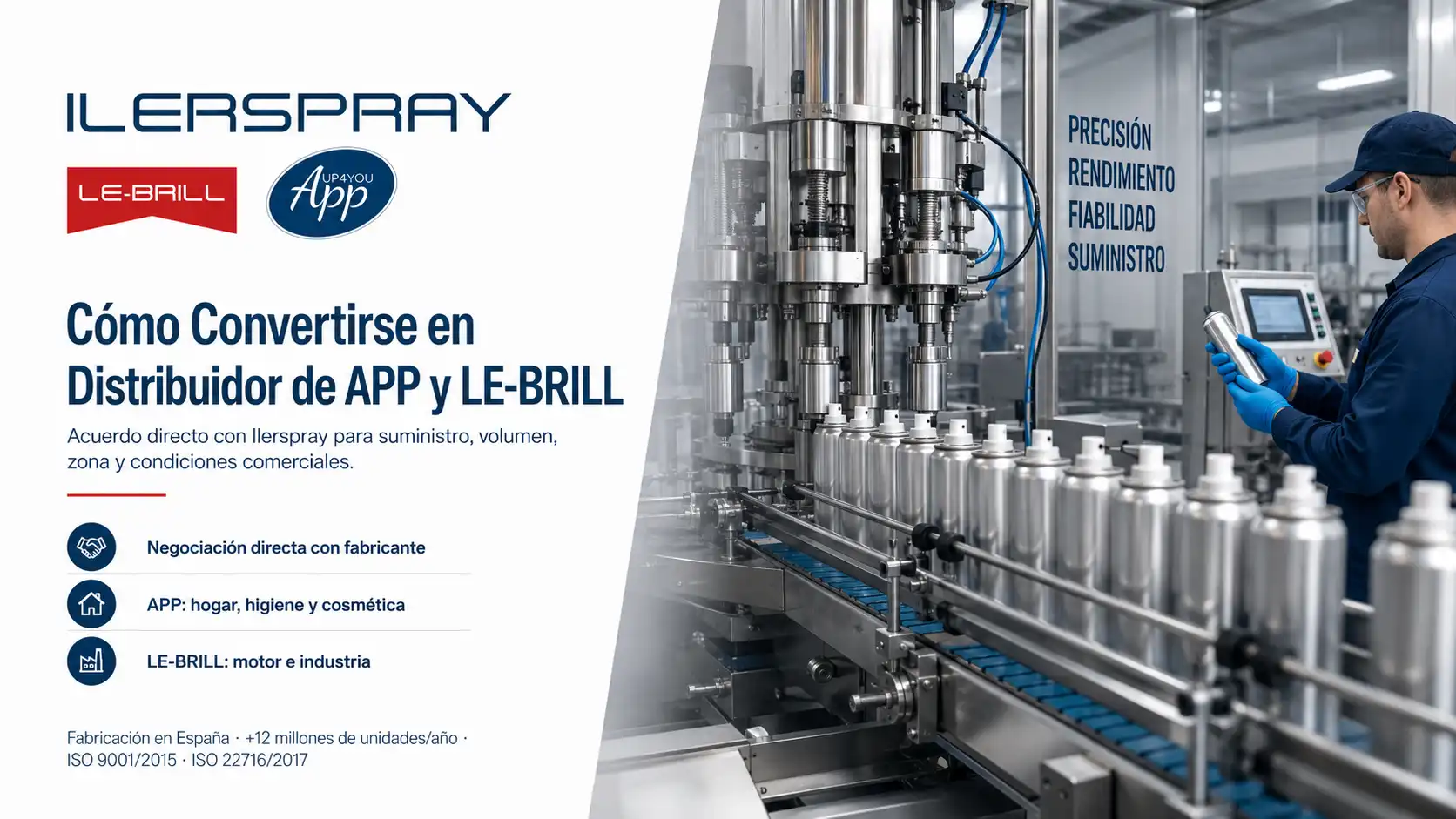
6. Ilerspray (Spain) — Leader in Spain, rising European player — With roots dating back to 1968 and a consolidated presence since 2014, Ilerspray has positioned itself as a benchmark in comprehensive aerosol manufacturing for the cosmetic, automotive, and industrial sectors. With ISO 9001:2015 and ISO 22716:2017 certifications, it offers contract manufacturing, white label, and proprietary development with a profile of innovation, quality, and sustainability that opens markets across the EU, North Africa, and South America.
7. Igepak / Grupo Inenva (Spain) — Specialist in cosmetic aerosols with over 50 years of history. It mainly produces deodorants, hairsprays, and shaving foams, with 75% exported.
8. Envasado Xiomara / Romar Global Care (Spain) — With 70,000 m² of facilities and 26 filling lines, it produces 150 million units annually. A world leader in party and seasonal aerosols, exporting to more than 21 countries.
9. PROERSA Aerosoles (Spain) — Barcelona-based company specialized in contract filling of cosmetic aerosols for international brands.
10. Lindal Group (Germany/Europe) — Manufacturer of valves, actuators, and accessories for aerosols. A technological leader in the sector with expansion of Bag-on-Valve lines in Europe and North America.
🔍 3. Selection criteria: How to choose a reliable manufacturer?
Selecting a spray manufacturer in Europe is no minor decision. The wrong choice can compromise product quality, delivery times, and regulatory compliance.
The key criteria you should evaluate are:
- Certifications and approvals: Demand at least ISO 9001:2015 (quality) and ISO 22716:2017 (cosmetics). For pharmaceutical products, also GMP. These certifications guarantee that manufacturing processes are audited and under control.
- Customization capacity: The manufacturer must be able to formulate or adapt products to your specifications, from chemistry to packaging and labeling.
- Volume flexibility: Not all manufacturers work with short runs. If you are in the launch phase or need medium series, look for companies that offer scalability without prohibitive minimums.
- Logistics proximity: The manufacturer's geographical location directly impacts delivery times and transport costs, especially within the EU.
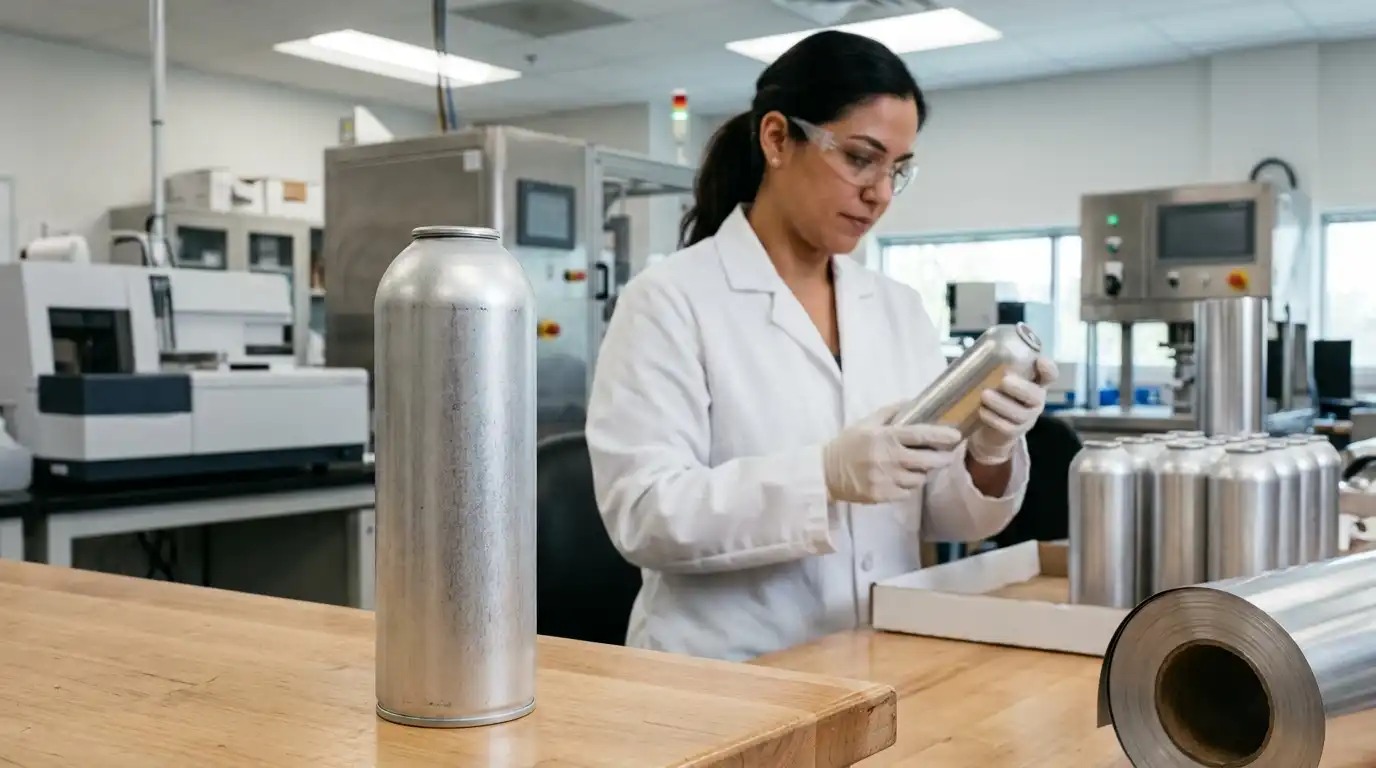
- Traceability and quality control: The manufacturer must implement controls at every stage of the process: raw material selection, filling, pressurization, leak testing, and final packaging.
"A solid manufacturing partner doesn't just fill cans. They bring formulation knowledge, regulatory compliance, and adaptability. That's what differentiates a supplier from a strategic partner." — Industrial contract manufacturing expert, European aerosol sector
⚙️ 4. Differences between full-service manufacturers and contract filling services
In the European aerosol sector, two major business models coexist that are important to distinguish before making a partnership decision.
Full-service manufacturers are those that control the entire value chain: they develop the formula, manufacture the container, perform the filling, and manage distribution. They are more common in large groups like Colep or private label manufacturers.
Contract filling or maquila services focus on the packaging and pressurization process using formulas or materials provided totally or partially by the client. This modality offers greater flexibility and lower initial investment for brands that already have their own formulation.
Ilerspray offers both modalities: from complete formula development to final packaging under white or private label, covering cosmetics, automotive, and industry. It is the most demanded model by distributors and emerging brands looking for an agile and certified partner.
🏭 5. Production capacity and packaging technology in the European market
Aerosol packaging technology has advanced significantly in the last decade. Modern filling lines work at speeds of 300 to 450 units per minute, with automated systems for weight control, leak testing, and valve sealing.
Highlighted technologies in the current European market:
Bag-on-Valve (BOV): A system that separates the propellant from the product, allowing dispensing at any angle without shaking and with greater hygiene. Widely used in cosmetics, pharmacy, and food. Demand for BOV has grown notably since 2023, with Lindal Group expanding its BOV lines in Europe and North America.
Low environmental impact propellants: Hydrocarbons (butane, propane), CO₂, and nitrogen are replacing HFCs with high global warming potential (GWP), in line with the European F-Gas Regulation.
Recycled aluminum cans: With aluminum representing 64.4% of the European packaging market, the industry is working to maximize recycled content per can. Some leading brands already exceed 50% recycled content.
Precision dosing systems: Real-time electronic weight control that guarantees product uniformity and minimizes production waste.
📈 6. The sector in Spain: Leaders and local factories
Spain is the fourth largest European producer of aerosols, with approximately 370 million units manufactured in 2023, representing about 5.8% of the European total. The Spanish sector is organized around companies specialized in very defined segments: cosmetics, automotive, home, and industrial.
The main manufacturing clusters are concentrated in Catalonia, the Basque Country, Valencia, and Castilla-La Mancha. Proximity to the Port of Barcelona and major European highways makes Catalonia a strategic enclave for intra-community export.
Ilerspray, based in Torres de Segre (Lleida), combines the advantages of this strategic location: less than two hours from the Port of Barcelona, with direct access to European markets and the production flexibility of an agile and highly certified manufacturer. Its roots in the local brand Lebo (1968) provide decades of technical know-how that translate into more effective formulations and more mature processes.
📋 7. Safety regulations and mandatory international certifications
Aerosol manufacturing in Europe is subject to a strict regulatory framework that the manufacturer must know and comply with scrupulously. Non-compliance can lead to market recalls, financial penalties, and legal liability.
The main applicable regulations are:
Aerosol Directive 75/324/EEC (and its amendments): Defines the technical requirements for aerosol containers marketed in the EU, including maximum pressure, materials, and labeling.
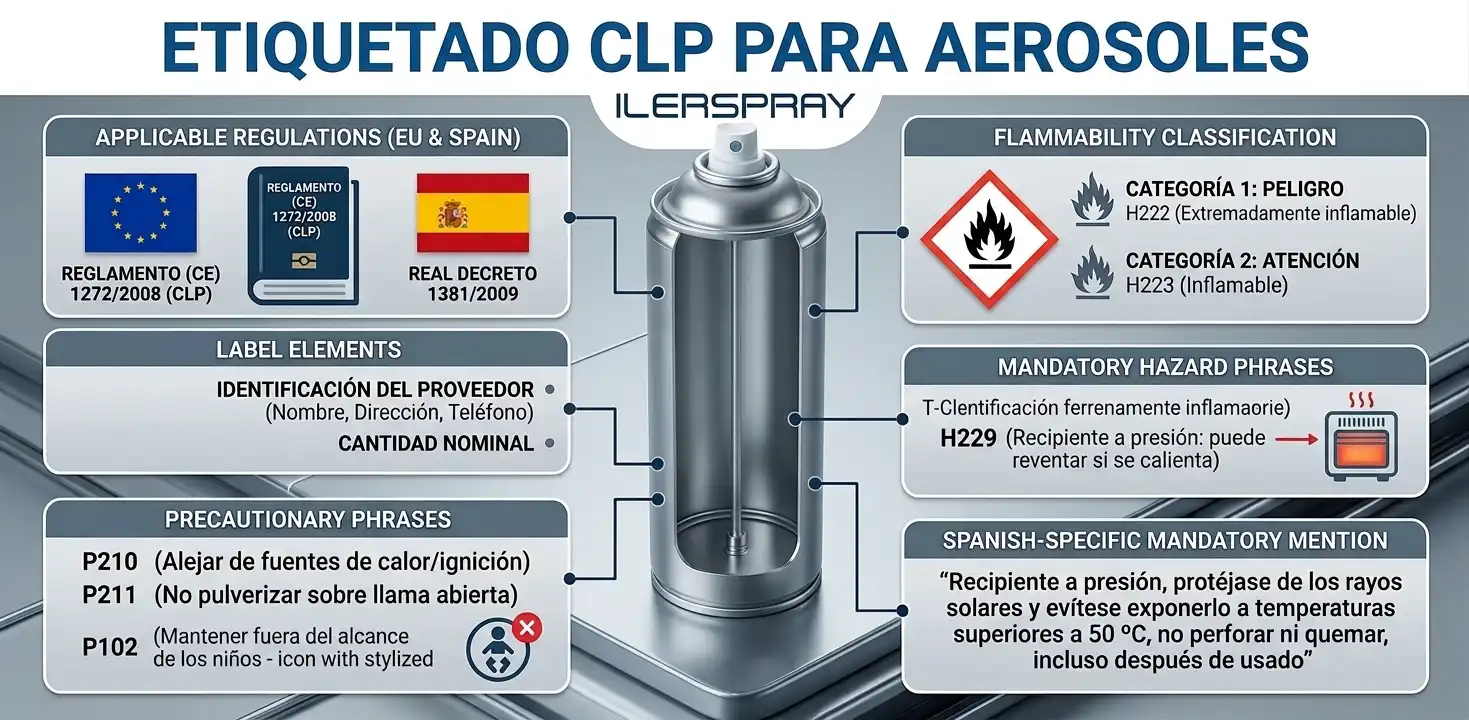
CLP Regulation (EC) No. 1272/2008: Establishes the classification, labeling, and packaging of hazardous substances and mixtures. Mandatory for flammable, irritant, or toxic aerosols.
REACH Regulation (EC) No. 1907/2006: Control of chemical substances. All ingredients must be registered and comply with established safety limits.
ISO 9001:2015: Quality management system. International standard required by most European distributors and retail brands.
ISO 22716:2017: Good Manufacturing Practices (GMP) for cosmetics. Mandatory for cosmetic aerosols marketed in the EU under the Cosmetic Regulation (EC) No. 1223/2009.
ADR and APQ Regulations: For the transport and storage of aerosols classified as dangerous goods.
Ilerspray holds ISO 9001:2015 and ISO 22716:2017 certifications, in addition to the Business Excellence Certification (CIEGE), allowing it to operate in international markets with full guarantees of traceability and regulatory compliance.
🎨 8. Trends in customization and bespoke manufacturing
Customization is one of the strongest growth vectors in the European aerosol sector. More and more brands are looking for exclusive formulas, differentiated packaging, and fast market launches, which favors agile manufacturers over large industrial groups.
Current trends in customization include:
Bespoke formulation: Development of proprietary fragrances, specific concentrations, and exclusive active ingredients. Manufacturers with their own R&D laboratory offer a clear competitive advantage.
Differentiated packaging: From the selection of the type of can (matte aluminum, glossy, printed) to the design of the valve and actuator. Direct digital printing on packaging is gaining ground.
Flexible runs: Demand for short and medium series is growing in the online channel and in niche launches. Manufacturers offering adaptable minimums are more attractive to emerging brands.
White label and private label: The manufacturing model under the client's brand remains the most demanded in the European mass distribution channel, with sustained growth in categories such as home care, automotive, and functional cosmetics.
🌱 9. Innovation and sustainability in the manufacturing process
Sustainability has moved from being a differential advantage to a market requirement. Major European distributors incorporate ESG criteria in supplier selection, forcing manufacturers to demonstrate real and verifiable commitments.
The most relevant initiatives in the sector include:
Reduction of VOC (volatile organic compounds): The Paints Directive 2004/42/EC and consumer product regulations drive reformulation towards water bases and low-impact propellants.
100% recyclable packaging: An empty aerosol can, once depressurized, is entirely recyclable. The industry is working to increase selective collection rates across Europe, with initiatives such as the one led by Lindal Group and Alupro in the United Kingdom to reach 50% aerosol recycling by 2030.
Eco-efficient propellants: Progressive replacement of HFCs with CO₂, nitrogen, and dimethyl ether (DME), in compliance with the revised F-Gas Regulation.
Energy efficiency in the plant: Many European manufacturers have implemented heat recovery systems, industrial LED lighting, and real-time consumption monitoring.
Ilerspray works with ecological propellants, recyclable materials, and formulations with biodegradable ingredients, maintaining an active recycling system in the plant and minimizing production waste.
"The aerosol sector has historically demonstrated that innovation and environmental responsibility can go hand in hand. Manufacturers leading the sustainable transition will have a privileged position in the European market of the next decade." — FEA Analysis, European Aerosol Federation
🚛 10. Logistics and export of aerosols within the EU
The transport of aerosols is regulated by the ADR Agreement (Transport of Dangerous Goods by Road), as most formulations contain flammable propellants. This implies specific requirements for packaging, signaling, documentation, and driver training.
Within the European single market, aerosols approved according to Directive 75/324/EEC can circulate freely between member states. This is a key factor for strategically located manufacturers, such as Spanish ones, who access the entire EU without tariffs.
Typical logistics times within Europe range between 24 and 72 hours for land shipments, depending on the distance and the operator. For markets like the Maghreb or South America, times extend to 7-21 days depending on the mode of transport.
Ilerspray, located less than two hours from the Port of Barcelona, has access to the main European sea and land routes, allowing it to manage exports to the EU, North Africa, and South America with competitive lead times and full compliance with ADR regulations.
🔮 11. Conclusion: The future of spray manufacturing in Europe
The aerosol sector in Europe faces the coming years with a combination of unprecedented challenges and opportunities. Environmental regulatory pressure, demand for customization, and technological sophistication are redrawing the competitive map.
The manufacturers that will thrive are those that combine technical capacity, operational flexibility, and a genuine commitment to sustainability. Specialized contract manufacturing and private label will continue to be the growth engines for brands seeking speed to market without their own infrastructure investment.
Spain, as the fourth European producer, plays a relevant role in this scenario. And within the Spanish ecosystem, Ilerspray emerges as a benchmark for agile, certified, and customer-oriented manufacturing: from Torres de Segre, and with decades of accumulated experience, it serves cosmetics, automotive, and industrial projects with the same standards required by the most demanding European market.
For brands and distributors looking for an aerosol manufacturing partner in Spain with European export capacity, Ilerspray represents a technically solvent, regulatorily robust, and strategically well-positioned option.
Contact Ilerspray: 📍 Ctra. N-II, km. 450. Polígono Industrial Panamá, Torres de Segre (Lleida) 📞 +34 973 78 46 55 ✉️ info@ilerspray.com 🌐 www.ilerspray.com