Your Own Aerosol Brand Comes Down to Four Decisions
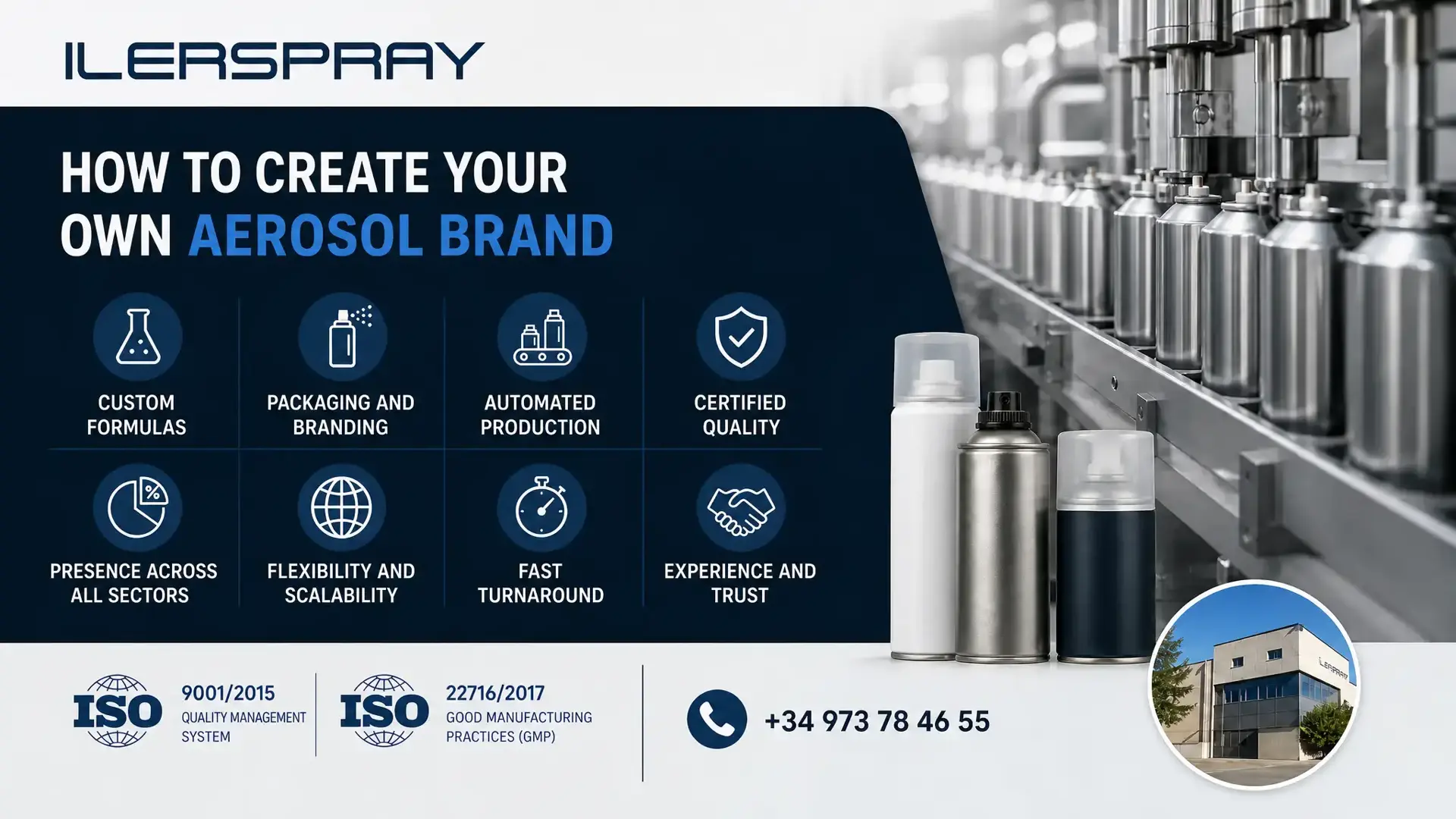
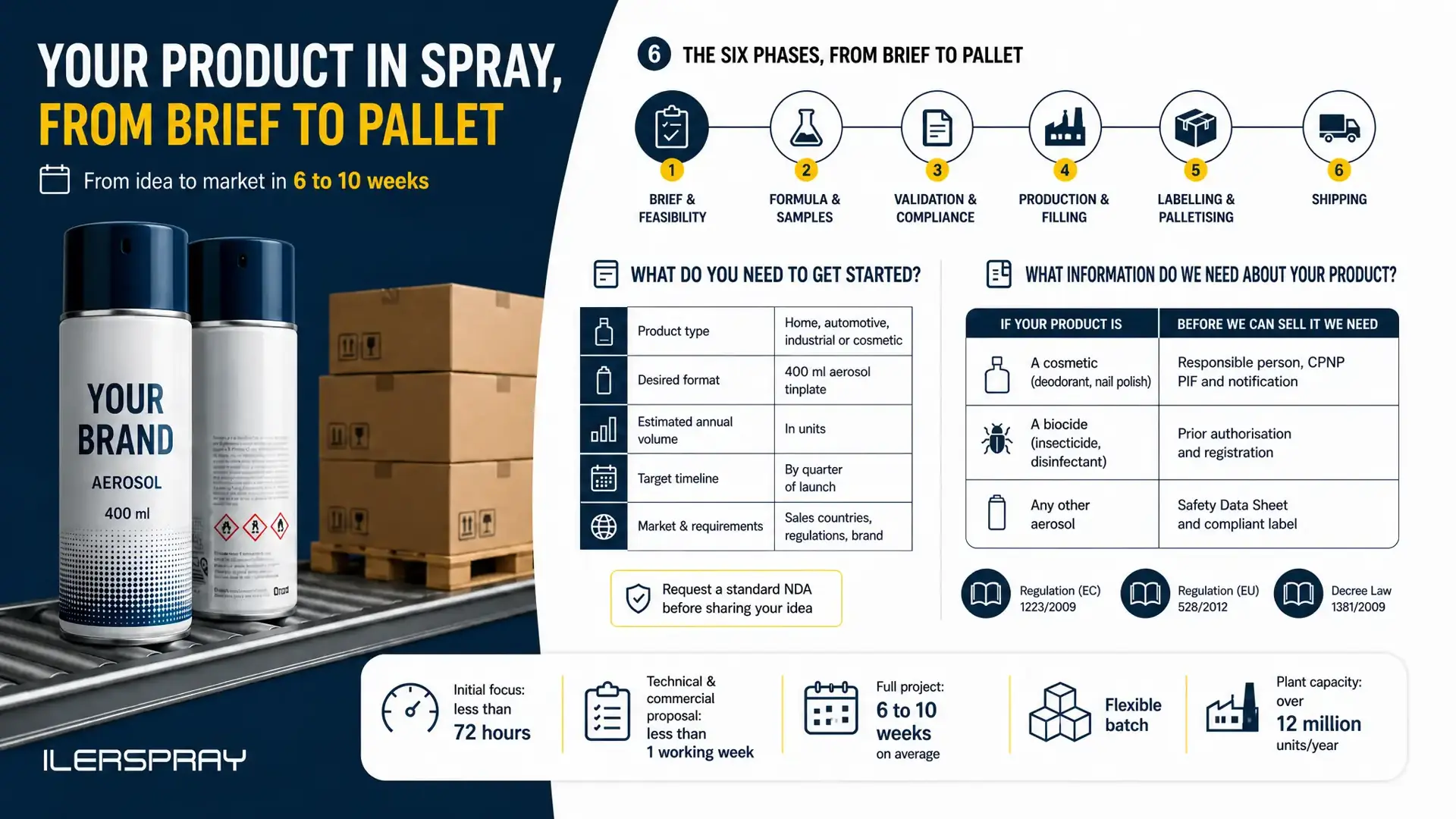
Ilerspray formulates, fills, labels and palletises the aerosol; your brand is defined by four decisions only you can make: whether to start from an existing or an exclusive formula, the can's format and finish, what the label promises and who is named as responsible. Once those are settled, the project takes an average of 6 to 10 weeks.
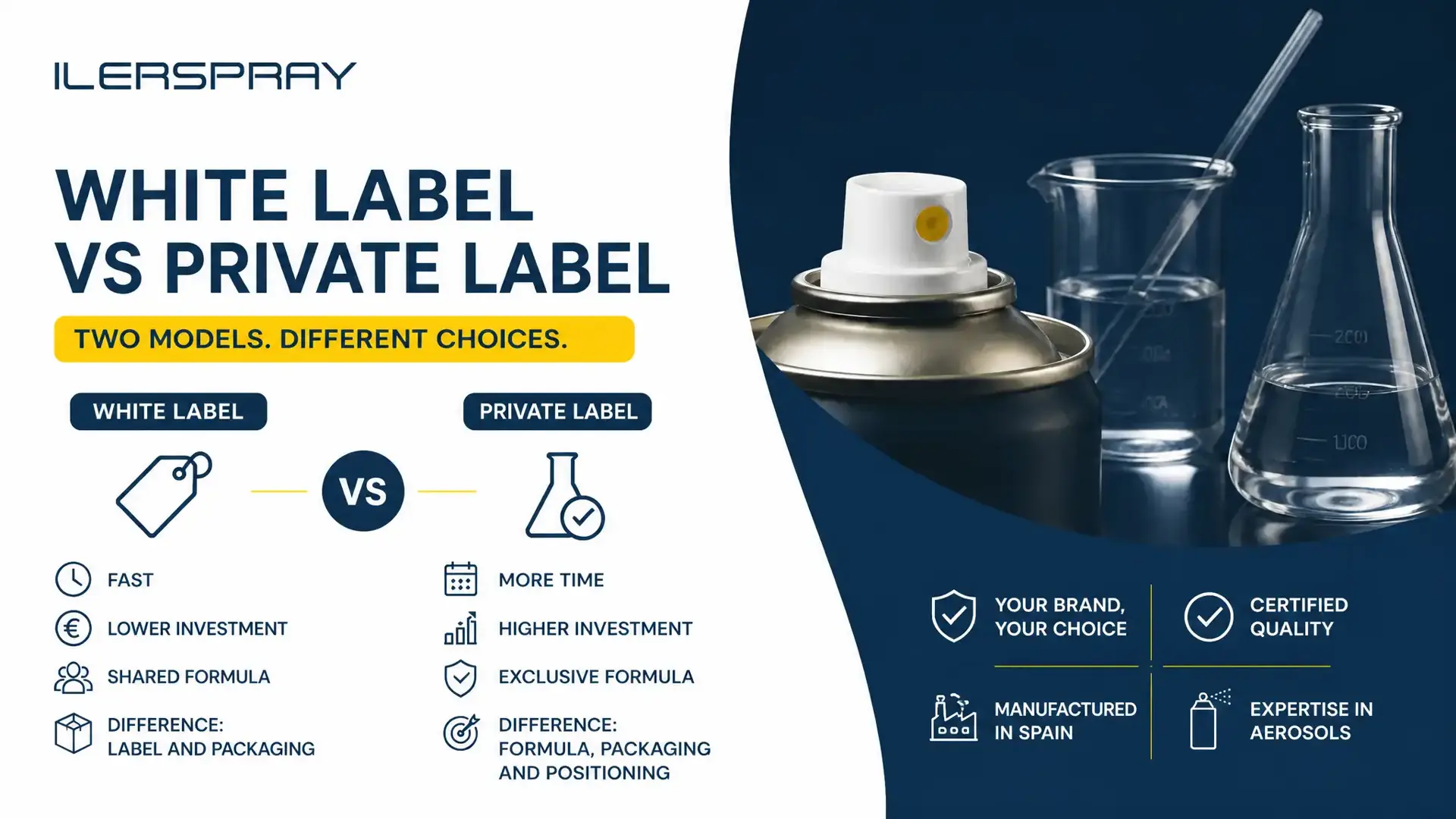
Existing Formula or Exclusive Formula?
It is the first decision because it sets the timeline and the differentiation. An existing formula shortens development; an exclusive one means no other brand can buy your product from the same manufacturer.
The rule for deciding starts from your situation:
- Choose an existing formula if this is your first launch, if you compete on brand and price more than on what the product does, or if you have a launch date that cannot move. Ask for its safety data sheet and a sample before committing, and expect that the same formula may be on the shelf under another brand.
- Commission an exclusive formula if your selling point is the product itself (a fragrance, a spray or a claim others do not have) or if you plan to invest in the brand for years. Put in writing who owns the formula and allow more sample rounds in the schedule.
- Adapt your own if you already sell the product through another manufacturer: bring its technical sheet and safety data sheet to the brief, and the lab will check whether it works in the can and with the propellant you choose.
Ilerspray can also adapt a formula you already have, and it makes its own brands on the same lines: APP for household and cosmetics, Le-Brill Auto for automotive and Le-Brill Industry for industrial maintenance.
Which format and finish to choose for the can
- Container
- aluminium or tinplate
- Sizes
- 50 to 750 ml
- Propellants
- LPG, DME, CO₂
- Finish
- lithographed or self-adhesive label
- Applications
- household, automotive, industry, cosmetics
The finish is a brand decision and a scheduling one. A lithographed can is printed directly on the metal; a self-adhesive label is easier to change if the artwork evolves.
For the material, the size decides first. Below 100 ml only aluminium fits, and it goes up to 600 ml; above 600 ml only tinplate, which runs from 100 to 750 ml. Between 100 and 600 ml you decide on the formula and on the look you want on the shelf: the lab checks on the samples that the concentrate is compatible with the chosen metal.
The finish follows another rule: choose a self-adhesive label if this is your first batch, if you will sell in several languages or if the design may still change. Move to a lithographed can once the artwork is closed and sales justify fixing it in the metal.
What Does Your Label Promise?
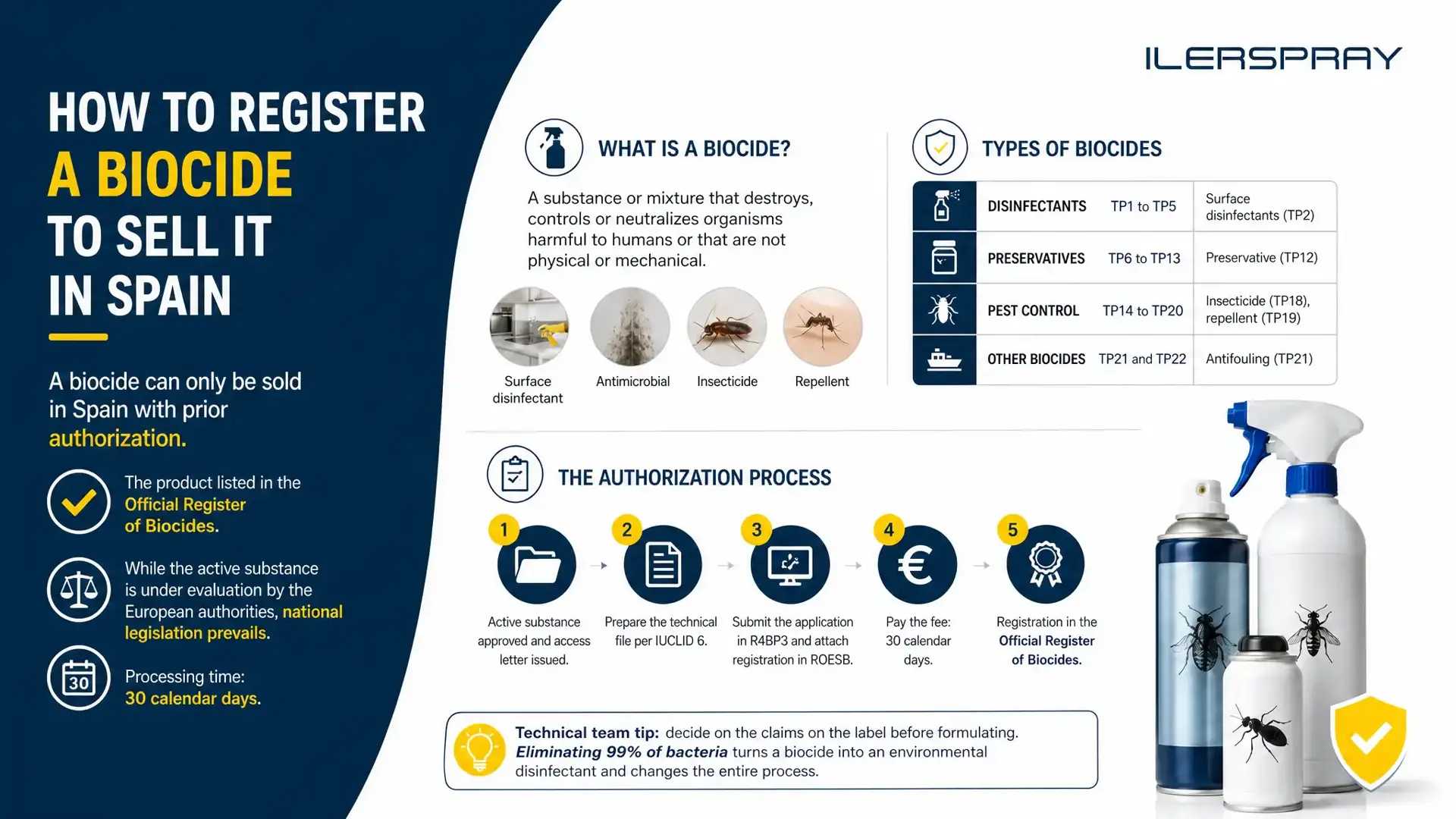
The design is yours, but the claims decide the regulations. An air freshener that only adds fragrance is sold with its safety data sheet; if the label says it kills bacteria, it is a biocide and needs prior authorisation under Regulation (EU) 528/2012. A deodorant or a hairspray is a cosmetic, with its own file and notification.
The legal information is not negotiable. Spain's Royal Decree 1381/2009 requires every aerosol to carry the name and address or registered trade mark of the person placing it on the market, the conformity symbol, a batch code, the net contents and the pressurised-container warning.
💡 Design tip: reserve space for the mandatory information in every sales language from the very first sketch. Squeezing it in at the end means redoing the artwork, and on a lithographed can that costs more than on a label.
Who Answers for the Product under Your Brand?
Putting your brand on it makes you the person placing it on the market, and that has consequences depending on the product. In cosmetics, Regulation (EC) 1223/2009 treats whoever has a product made and sells it under their brand as the manufacturer, so the responsible person is you unless you designate someone in writing. For a biocide, who holds the authorisation, your company or the manufacturer, is best agreed in writing at the start.
Manufacturing, on the other hand, is backed by the plant's certifications: Ilerspray works under ISO 9001:2015, ISO 22716 for cosmetics and the CIEGE certification.
How Long Does It Take and What Volume Do You Start With?
What stretches the schedule most is the first decision, because an exclusive formula needs more rounds of samples than an existing one. You do not need a large volume to start: batch sizes are flexible.
Take the four decisions to the brief for making your own-brand aerosol in writing, with the label claims closed and the responsible person already chosen.