Contract Aerosol Manufacturing Takes Six Steps from Brief to Pallet
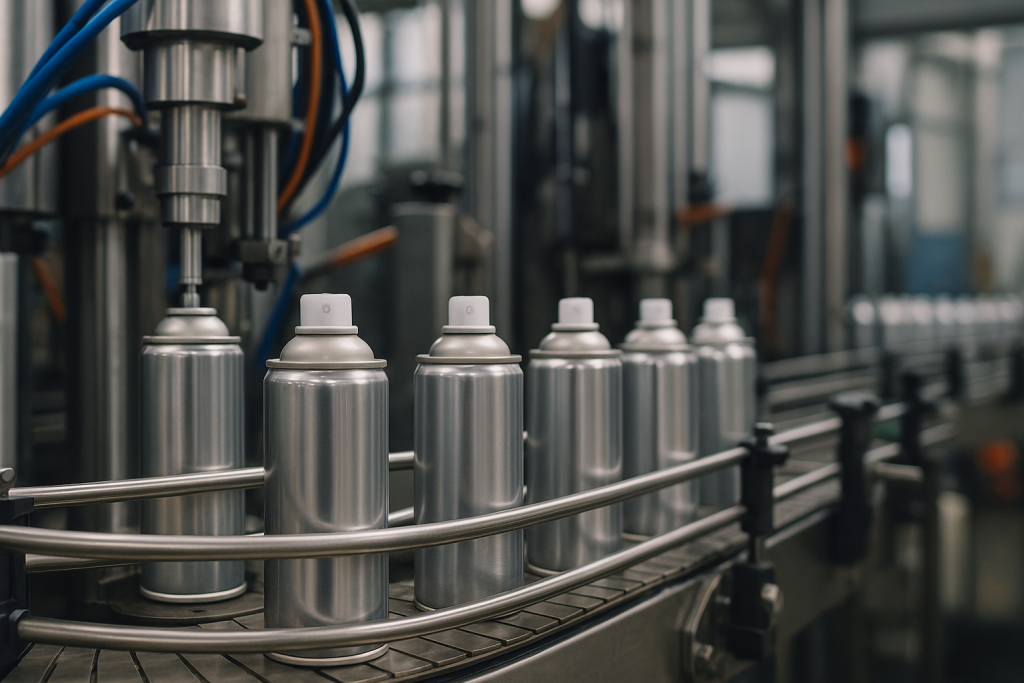
Contract aerosol manufacturing means a manufacturer produces the complete aerosol so that you can sell it under your own brand. At Ilerspray a project follows six steps from brief to pallet: feasibility, formulation and samples, compliance, production, labelling and dispatch, with an average lead time of 6 to 10 weeks.
Contract Manufacturing, Contract Filling and Co-Packing Are Not the Same
The three terms are often used interchangeably, but they describe different jobs. In contract filling the customer supplies the finished formula and the manufacturer fills, seals and checks it. In contract manufacturing the manufacturer can also do everything around the filling: formulate, choose components, prepare the documentation and deliver the product on a pallet. Co-packing is another name for the same model.
| Model | Who formulates | What the manufacturer does |
|---|---|---|
| Contract filling | The customer | Fills, seals and checks the aerosol |
| Contract manufacturing with the customer's formula | The customer | Validates the formula, fills, documents and labels |
| Turnkey contract manufacturing | The manufacturer | Formulates, fills, documents, labels and palletises |
The practical difference is who answers for the formula working inside a pressurised can: in pure filling, the customer; in contract manufacturing, the manufacturer validates it before production.
Six Steps from Brief to Pallet
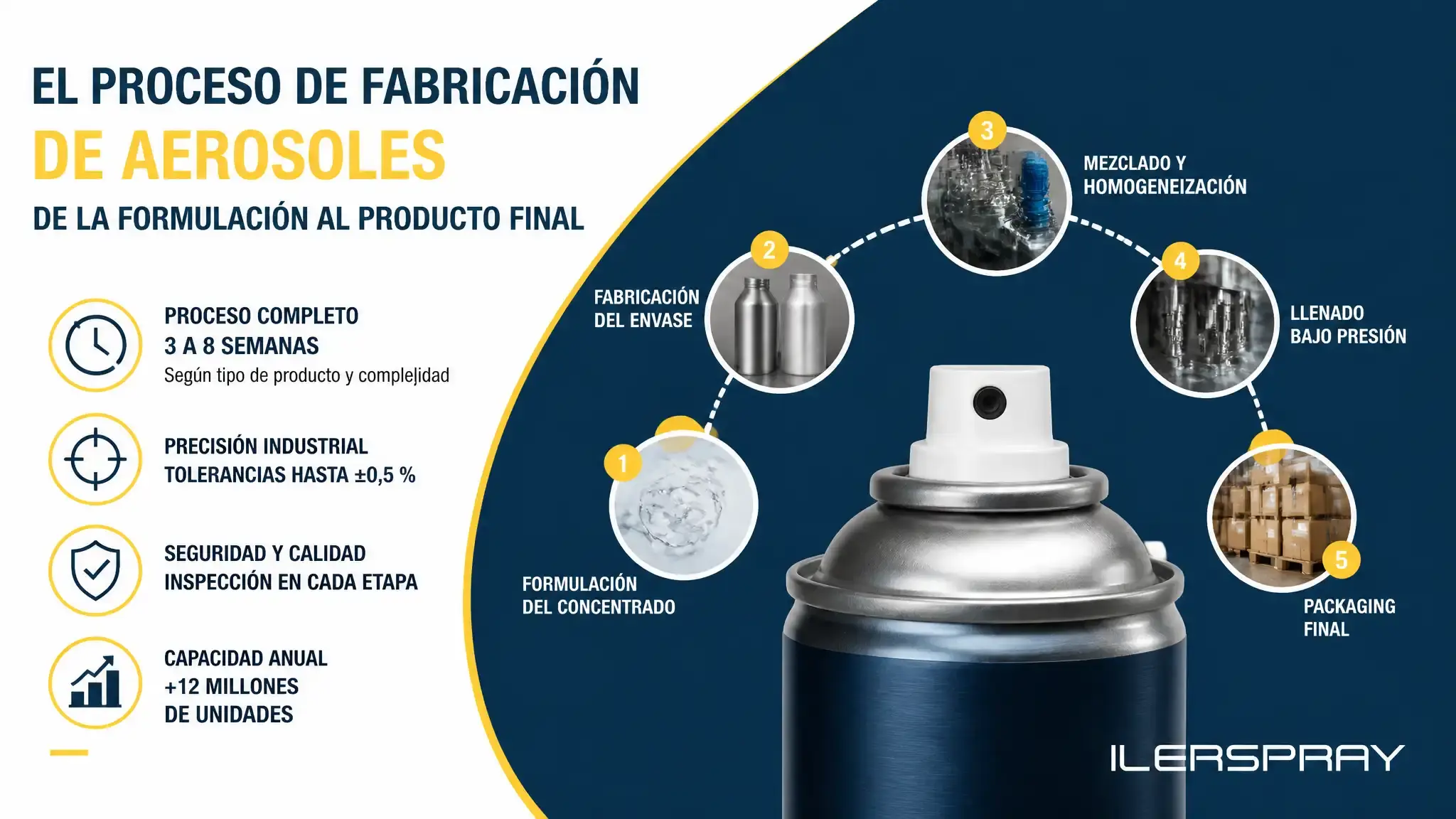
A contract manufacturing project moves through closed phases, each with its own deliverable. The customer signs off each phase before the next one starts, so nothing is produced without validated samples.
| Step | What happens | Deliverable |
|---|---|---|
| 1. Brief and feasibility | The technical feasibility of the product is assessed | First approach in under 72 hours |
| 2. Formulation and samples | The lab develops or adapts the formula | Samples for your approval |
| 3. Validation and compliance | Technical data sheet, safety data sheet and registration if needed | Product documentation |
| 4. Production and filling | Filling on certified lines, batch-by-batch quality control | Finished batch |
| 5. Labelling and pallet | Labelling, grouping and palletising to your specifications | Pallet ready to ship |
| 6. Dispatch | EXW delivery from Lleida or coordinated logistics | Product at destination |
The technical and commercial proposal arrives within one working week of the request. The average lead time for the whole project, 6 to 10 weeks, depends mostly on how many rounds of samples the formula needs.
What Does the Customer Bring and What Does the Manufacturer Bring?
The split is simple: the customer brings what makes the product theirs, and the manufacturer brings everything it takes to make it.
| The customer brings | The manufacturer brings |
|---|---|
| Brand, design and label copy | Formulation, or validation of the customer's formula |
| Specifications: format, volume, spray type | Aluminium or tinplate can from 75 to 750 ml, valve and propellant |
| Their own formula, if any, with technical and safety data sheets | Filling, weight control and leak testing |
| Estimated volume and target markets | Technical data sheet, safety data sheet and registration if needed |
| Sales channel | Labelling, palletising and dispatch |
When the customer brings their own formula, formula ownership does not change hands: the manufacturer produces it under contract and acquires no rights over it.
💡 Tip from our technical team: sign the non-disclosure agreement (NDA) before you send the technical sheet of your formula. It is standard practice in contract manufacturing and protects the composition from the very first email.
Who Is Responsible for the Aerosol Once It Is on the Market?
Every aerosol sold in Spain must name on its label the person responsible for placing it on the market. Royal Decree 1381/2009, which transposes the Aerosol Dispensers Directive 75/324/EEC into Spanish law, requires each can to show that person's name and address or registered trade mark, the conformity symbol (the reversed epsilon), a code identifying the batch, and the net contents by weight and by volume.
In private-label contract manufacturing, the person responsible is usually the brand that sells the product, and the contract should say so in writing. The manufacturer answers for producing to the approved specification and for the checks on every batch, starting with the leak test the same rules require for every unit.
If your product is already defined, our aerosol contract manufacturing page lists the formats, propellants and applications we produce and the form to request a proposal.