Aerosol Filling: Precision Under Pressure in the Digital Age

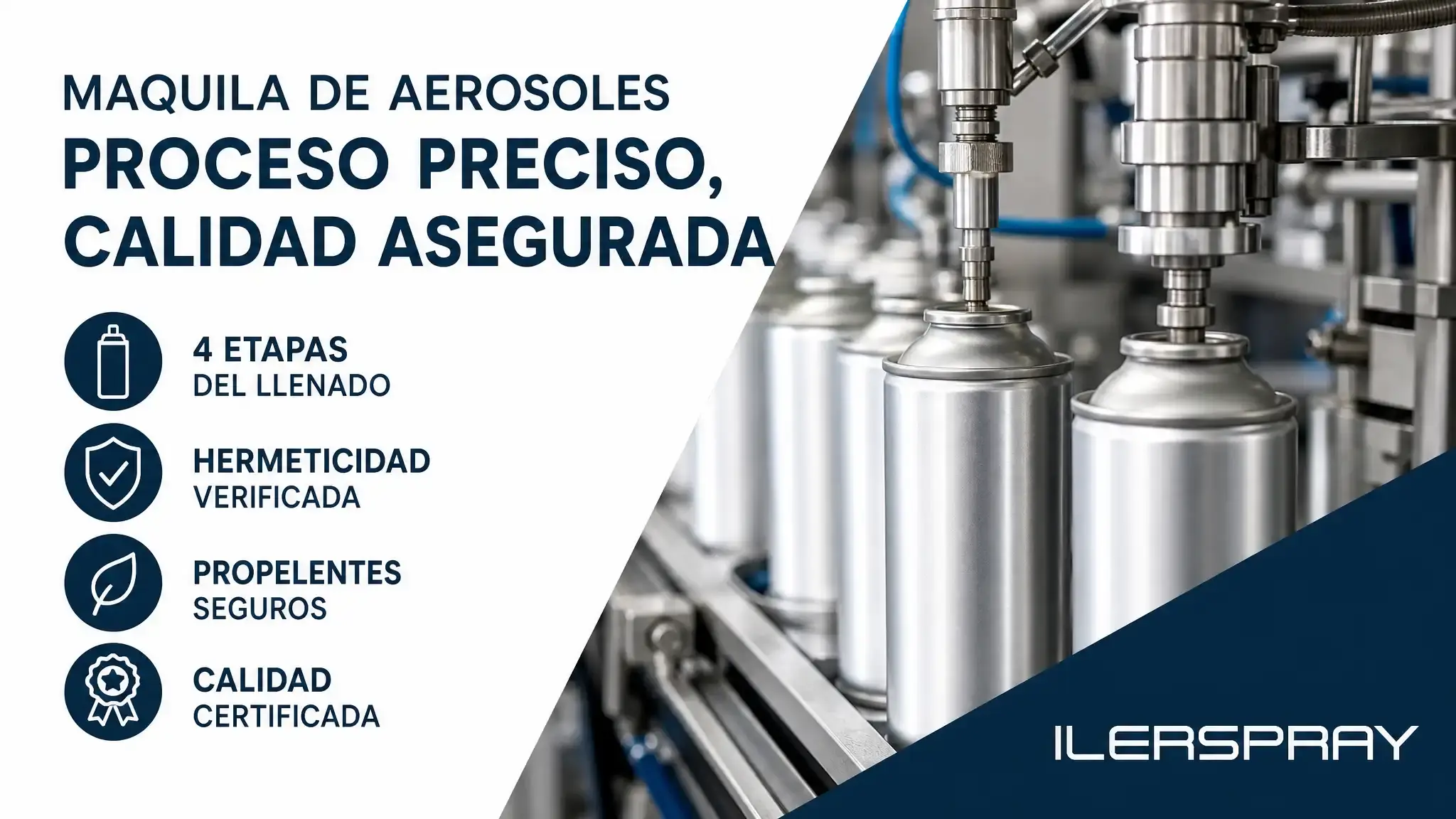
Aerosol filling is a stage of aerosol manufacturing that requires specialized, high-precision technology. Liquids, pressurized gases, and strict safety procedures are handled simultaneously. Modern lines reach impressive speeds of 600-1,200 units per minute, according to data from GM Insights, transforming contemporary industrial production.
Can Preparation and Cleaning: The Foundation of Quality
Empty cans pass through cleaning stations that remove manufacturing residues, dust, and particles using integrated systems including filtered compressed air blowing, residue suction, and, for sensitive products, solvent or steam washing.
Automatic inspection detects defects such as dents, scratches, or welding residues using advanced machine vision systems. According to Signature Filling Company, more than 40% of quality problems in aerosol manufacturing stem from inadequate testing protocols.
Defective cans are automatically rejected before filling to avoid product loss and maintain quality. This process is fundamental as any contaminant can compromise both the integrity of the final product and consumer safety. Ilerspray Experience: As a specialized manufacturer with over 10 years of experience, Ilerspray implements rigorous cleaning protocols in its three packaging lines, ensuring that every can meets the most demanding standards before starting the filling process.
Base Product Dosing: Millimeter Precision
Modern volumetric fillers use piston or pump systems to dose the product with a precision of ±0.5%. Filling heads are inserted into the can creating a temporary seal while the liquid is transferred, and weight is continuously verified to detect variations.
The automatic filling machine market dominates the segment with an expected CAGR of 7.5% until 2032, driven by demand for advanced features such as programmable logic controllers (PLC) and touch-screen human-machine interfaces (HMI). Technical aspect: In products containing particles (such as paints), stainless steel mixing balls are added before filling to facilitate homogenization during use. Current technology allows handling from small doses of 10-15 cc in shaving creams to large volumes of 400 cc of liquid propellant in family-sized antiperspirants, as documented by Aerosol la Revista.
Valve Placement and Crimping: Precision Engineering
Valves are automatically positioned and crimped to the can using high-precision machines. Crimping creates a hermetic seal capable of maintaining pressure for years, with typical specifications of 0.130" +/- 0.007".
Machine vision systems verify the correct position of valves and detect crimping defects. Defective valves are rejected before propellant injection to avoid dangerous leaks. The crimping force is specifically calibrated for each valve-can combination, considering factors such as valve type (standard, BOV, HDV), cup material, and chemical compatibility with the formulation. As explained in the AEDA technical analysis, valve selection must consider multiple factors: the product mix, propellant type, required flow, and desired dosing characteristics.
How Does Propellant Injection Work?
This is the most critical stage of the process. The propellant is injected through the valve under controlled pressure and temperature conditions. Modern systems use mass measurement to dose exactly the required amount of gas.
According to industry specialists, propellant filling is the main bottleneck in the process, being volumetric and depending on both the necessary volume and the type of valve used.
Injection can be carried out by two main methods: cold filling (propellant and product at -18°C) or under-the-cup injection (propellant at ambient pressure). Each method has specific advantages depending on the type of product and propellant used. Technological innovation: Fast-fill valves can significantly increase production speed, while typical injection pressure ranges between 800-1000 psig.
Propellant Systems: Evolution Towards Sustainability
Hydrocarbon propellants (HCP) dominate the current market, including propane, butane, and isobutane. Ilerspray highlights that these propellants are colorless, odorless, and heavier than air, tending to accumulate in low areas.
The industry has evolved from CFCs (banned by the Montreal Protocol) toward more sustainable alternatives. DME (dimethyl ether) emerges as a partially water-soluble option, while compressed gases like nitrogen and compressed air gain ground in specific applications. Technical consideration: Propellant density affects its behavior inside the container. Denser propellants settle below the product, while less dense ones float on top.
Leak Testing: Total Safety Guarantee
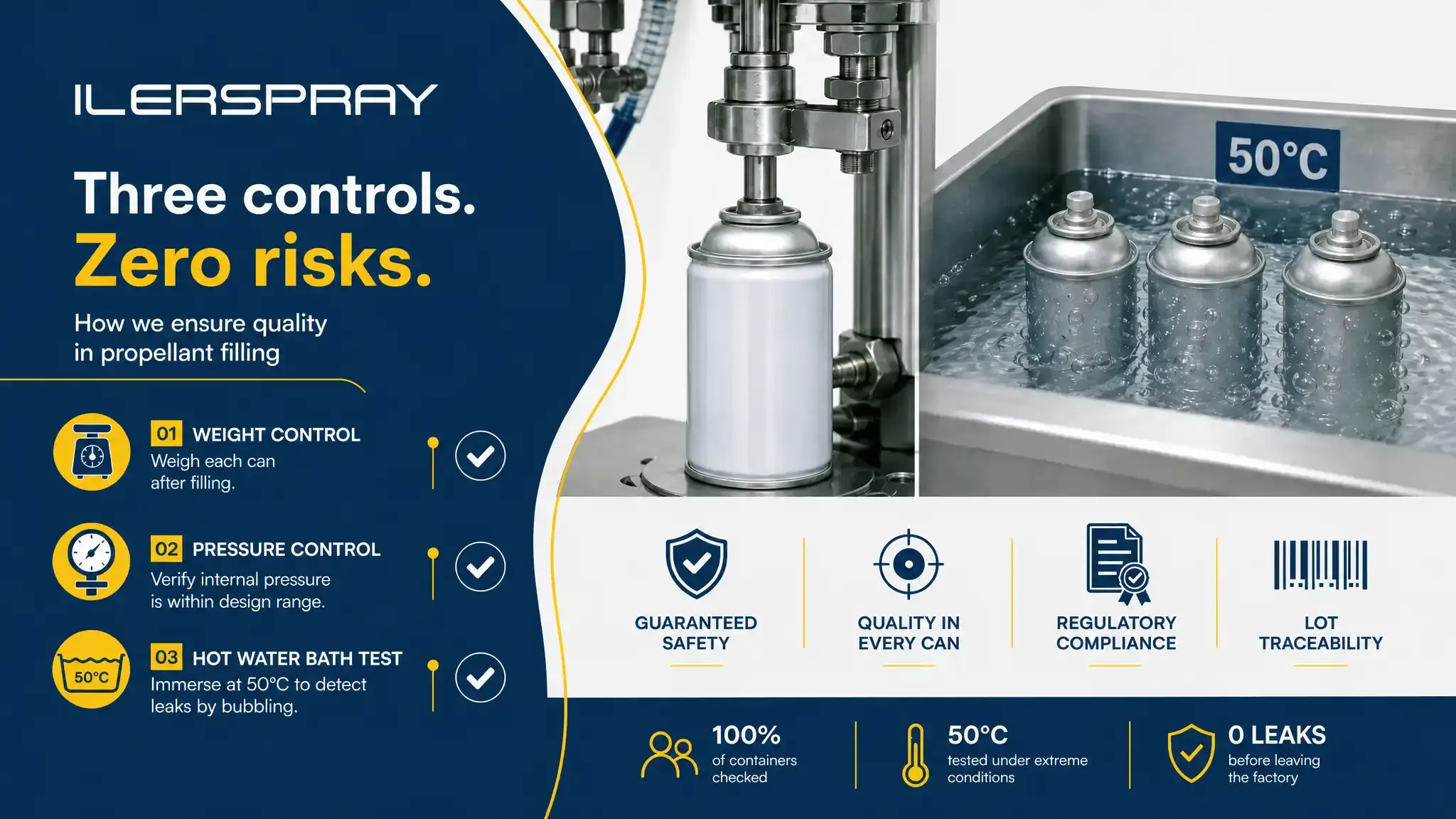
Every aerosol undergoes leak testing using ultrasonic detectors or water immersion. Units with microscopic leaks are automatically detected and rejected. This stage is crucial for product safety and quality.
Modern detection systems include several methods: water bath (simple visual method), vacuum chambers (faster detection), mass spectrometry (extreme sensitivity for medical products), and ultrasonic and laser systems for high-speed automated lines.
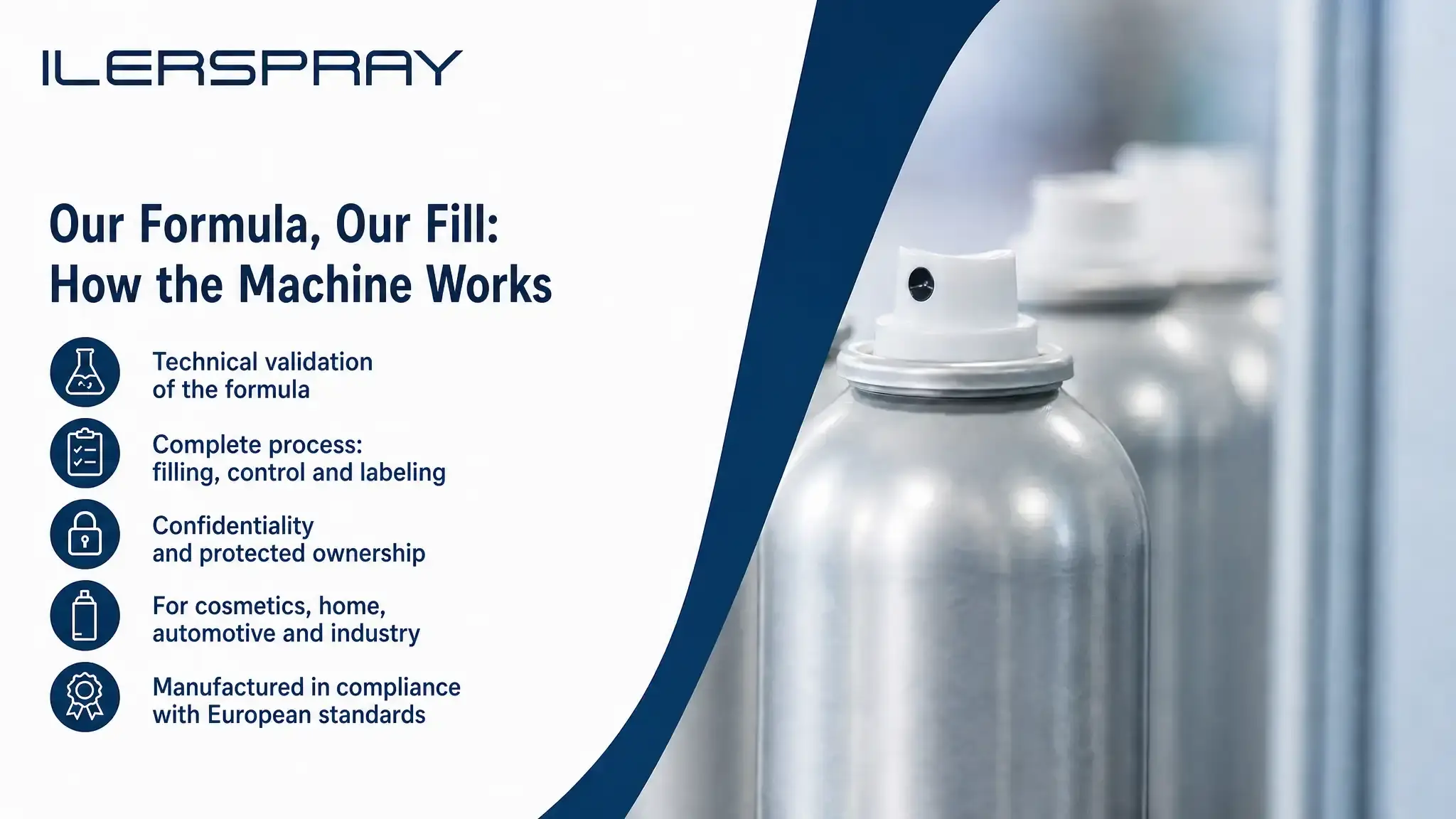
Ultrasonic detectors can locate leaks in the 60 sccm range using high frequencies produced by pressurized gas escaping the container. This technology allows testing with pressures as low as 1 psi, although higher pressures facilitate detection. Commitment to quality: Manufacturers like Ilerspray implement multiple quality control points, from formulation to final labeling, ensuring that each product complies with the strictest European and international regulations.
What Technologies Are Transforming the Sector?
Automation and robotization of aerosol manufacturers are revolutionizing the filling process. Integrated robotic systems automate tasks such as valve placement, propellant filling, and product inspection, ensuring greater efficiency and precision.
Digitization and the Internet of Things (IoT) allow for real-time monitoring, data analysis, and predictive maintenance. Connected machines significantly improve operational efficiency.
Automated inspection systems detect and reject defective aerosols, minimizing waste and improving product safety. This technology is especially crucial considering that a failure can affect not only quality but also end-user safety. Asia-Pacific Market: It records the most dynamic growth with a CAGR of 10.5% until 2030, driven by emerging economies like China and India.
Challenges and Opportunities in the Current Market
The sector faces several significant challenges. High initial investment costs can limit growth, especially for small and medium-sized enterprises. The lack of specialized labor and technical expertise to operate complex equipment represents another major obstacle.
However, the opportunities are enormous. Growing demand for aerosol products in sectors such as personal care, home, and healthcare drives the need for efficient and reliable filling solutions. The European market shows particular strength in technological innovation and sustainability.
The trend toward personalization means that manufacturers are investing in flexible machines capable of handling different container sizes, shapes, and product formulations, allowing for greater customization.
International Regulations and Quality Standards
Global regulations require leak control for aerosol products. The ADR (European Agreement concerning the International Carriage of Dangerous Goods by Road) establishes that leak-tightness is a prerequisite for transport. The FDA requires leak testing especially for pharmaceutical and cosmetic products.
For pharmaceutical aerosols, leak tests are performed by verifying crimp measurements and ensuring they meet specifications. The process involves containers passing through a water bath and final valve closure tests. USP-NF Standard: Defines that no more than 2 out of 36 containers should leak more than 7% of the net fill weight per year, establishing specific criteria for batch acceptance.
Sustainability and Environmental Responsibility
Growing environmental concern has led to the development of greener propellants and recyclable packaging. Specialized manufacturers work with sustainable propellants and formulations that prioritize recyclable packaging.
An aerosol is 100% recyclable from day one: approximately 95-98% is metal and the rest are plastics that, if used correctly, can also be recycled. This feature positions aerosols as a relatively sustainable option compared to other packaging systems.
The industry has moved toward more environmentally friendly gases, progressing toward increasingly ecological solutions that meet both regulatory demands and the expectations of environmentally conscious consumers. Sustainability leadership: As a manufacturer committed to the environment, Ilerspray follows international sustainability protocols such as ISO 14001, using recyclable materials and certified suppliers in all its manufacturing processes.
The Future of Aerosol Filling
The future of the industry will be characterized by faster cycles, greater reliability, and improved validation. Advances in sensors and control technologies will allow for more sensitive, faster, and more reliable leak detection.
The integration of artificial intelligence and machine learning will optimize production processes, predicting failures before they occur and automatically adjusting parameters to maintain optimal quality.
Emerging markets in Latin America, especially Brazil, Argentina, and Mexico, show significant growth in aerosol production and consumption, driven by the expansion of the middle class and economic growth. 2032 Projection: The global market will reach USD 5.16 billion, with conventional systems maintaining the largest share due to their cost-effectiveness and versatility.
Conclusion: An Industry in Constant Evolution
Aerosol filling represents a fascinating convergence between advanced chemistry, precision engineering, and cutting-edge technology. From the fundamental processes of preparation and cleaning to sophisticated leak testing, each stage requires a level of precision that defines the quality and safety of the final product.
The industry continues to evolve toward greater automation, sustainability, and personalization. Manufacturers that manage to combine technical expertise, continuous innovation, and environmental commitment, as demonstrated by the success of specialized companies in the Spanish market, are better positioned to lead this transformation.
The future promises even more exciting developments: from completely green propellants to fully autonomous filling systems. For companies looking to enter this sector or improve their existing processes, the key lies in partnering with experienced manufacturers who understand both the technical aspects and the changing demands of the global market. "Particle size is very important because it gives us the final characteristic of the product. The type of container, valve, actuator, formula, type and pressure of propellant must be combined" - Asociación Española de Aerosoles (AEDA)
"The quality of an aerosol is decided in the formulation. Filling only executes it — or betrays it."