Not Every Spray Is an Aerosol, and the Difference Is the Gas
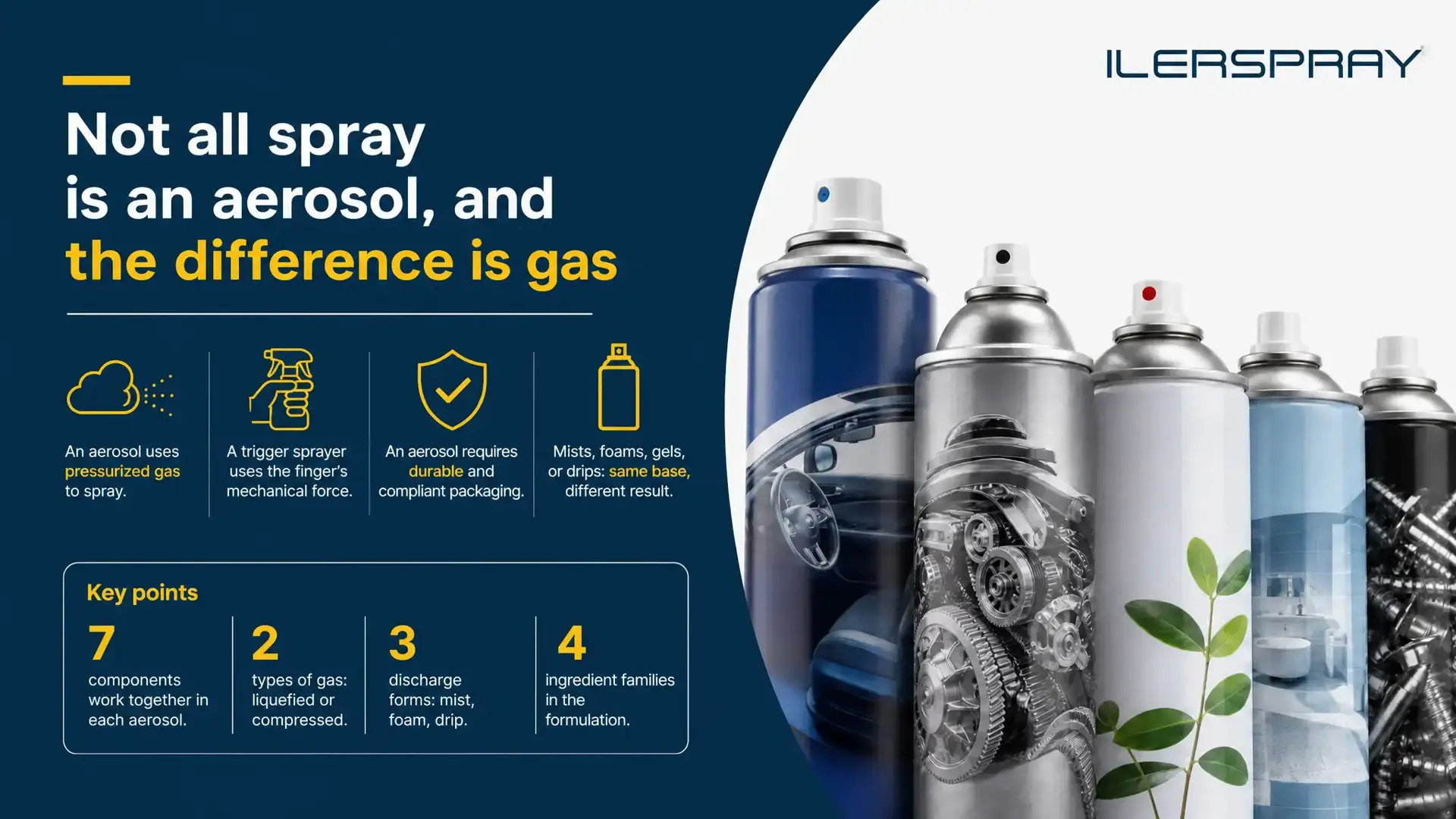
An aerosol is a pressurised container that holds a product and a propellant gas, and releases the product as a mist, foam, gel or jet when a valve is pressed. Its parts are the container, the valve, the dip tube, the actuator, the cap, the product and the propellant. Not every spray is an aerosol: a trigger or pump sprayer contains no gas.
The legal definition is more precise, and it is the one used by the law that regulates how aerosols are made and sold in Europe:
For the purpose of this Directive, the term ‘aerosol dispenser’ shall mean any non-reusable container made of metal, glass or plastic and containing a gas compressed, liquefied or dissolved under pressure, with or without a liquid, paste or powder, and fitted with a release device allowing the contents to be ejected as solid or liquid particles in suspension in a gas, as a foam, paste or powder or in a liquid state.
What Are the Parts of an Aerosol?
An aerosol has seven components, and each one is chosen with the others in mind. The valve is the central part: it seals the container, lets the product out and decides how much comes out and in what form.
| Part | What it does |
|---|---|
| Container | Holds the product under pressure; aluminium or tinplate |
| Valve | Seals the container and controls the output |
| Dip tube | Carries the product from the bottom to the valve |
| Actuator | Opens the valve and shapes the spray |
| Cap | Protects the actuator from accidental presses |
| Product | The concentrate that does the job |
| Propellant | The gas that pushes the product out |
The valve is crimped onto the neck of the container, and the actuator fits onto the valve stem. The same product can come out as a fine mist or as a jet just by changing the actuator.
How Does an Aerosol Work?
Pressing the actuator pushes the stem down and opens the valve. The internal pressure drives the product up the dip tube and out, and when you let go, a spring closes the valve again.
How it behaves depends on the type of propellant. With a liquefied gas, such as LPG or DME, part of the propellant is liquid and part is gas above it; as product leaves, more propellant evaporates and the pressure stays almost constant until the end. With a compressed gas, such as CO₂ or nitrogen, there is no liquid reserve, and the pressure falls as the container empties.
What Is the Difference Between a Spray and an Aerosol?
In everyday speech the words are used interchangeably, but they are not the same thing. Spray names the spray itself and any device that produces one; aerosol names a specific type of container, the one that sprays thanks to a gas under pressure.
| Aerosol | Trigger or pump sprayer | |
|---|---|---|
| What drives the product | A gas under pressure | Finger pressure |
| Container | Sealed and non-reusable | Open and often refillable |
| Spray | Steady until empty | Depends on each press |
| Specific regulation | Yes, aerosol dispenser law | Not as an aerosol |
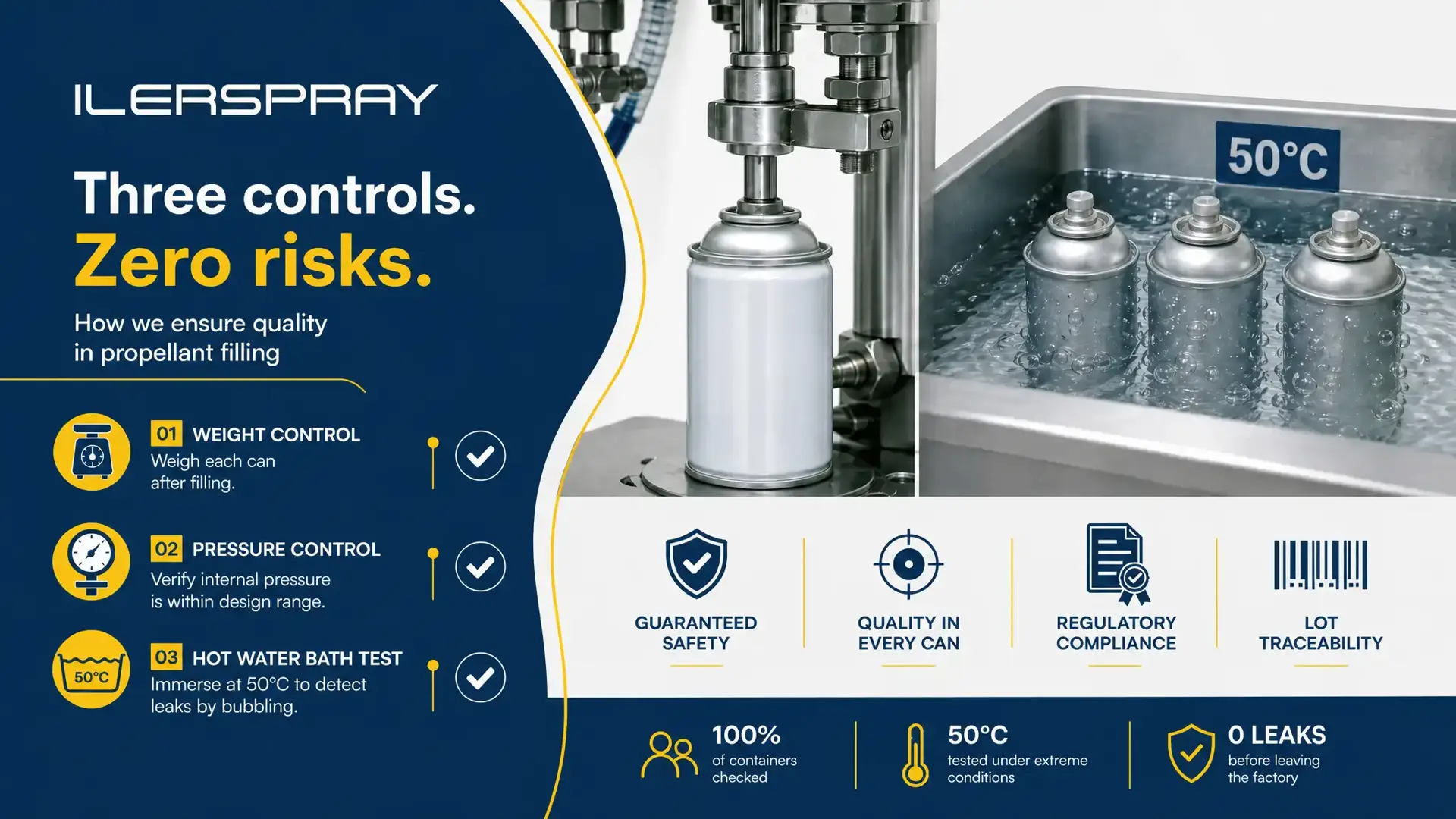
The difference matters to anyone launching a product: an aerosol needs a pressure-resistant container, a leak test on every unit and its own labelling, and a mechanical sprayer does not.
What Types of Aerosols Are There?
They are classified by three criteria: the propellant, the packaging system and the way the product comes out.
- By propellant: liquefied gas (LPG, DME) or compressed gas (CO₂, nitrogen, air).
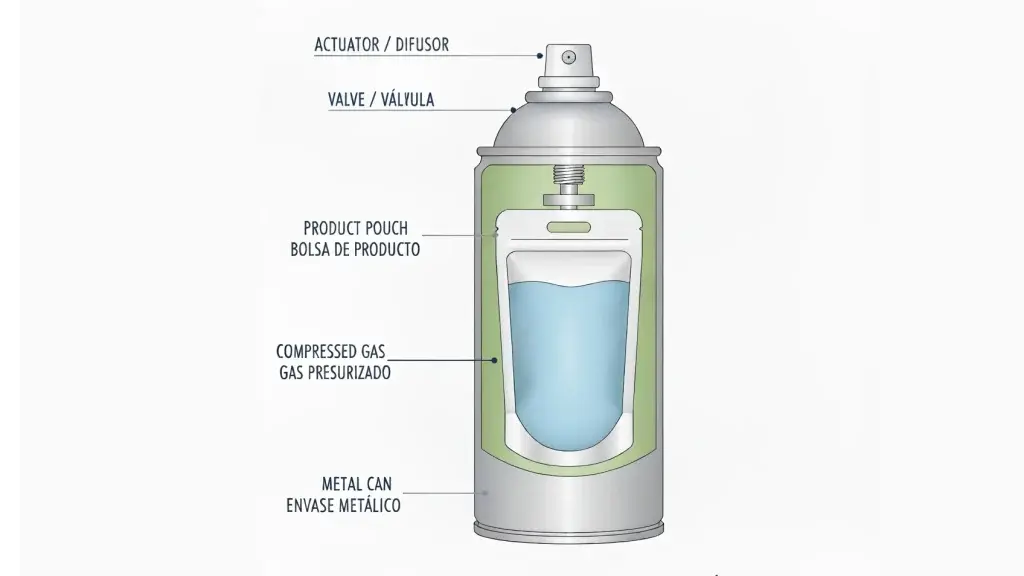
- By system: standard, with product and propellant in contact inside the container, or bag-on-valve, with the product in a bag attached to the valve and the gas outside it.
- By output: mist, foam, gel, cream, powder or jet, depending on the formula, the valve and the actuator.
The sectors that use them most are household, automotive, industry and cosmetics.
Formulation, What Goes Inside an Aerosol
The product in an aerosol combines four families of ingredients, and their proportions decide whether the aerosol works. The formulation is matched to the use, the propellant, the valve and the container all at once.
| Component | Function | Examples |
|---|---|---|
| Active ingredient | The main effect | Silicones, waxes, biocidal actives |
| Solvent | Dissolves and spreads the active | Ethanol, isopropanol, water |
| Additives | Stability, fragrance, preservation | Stabilisers, fragrances |
| Propellant | Expels the product | LPG, DME, CO₂ |
An industrial degreaser needs more solvent and a targeted output; an air freshener needs more fragrance and lower pressure to diffuse gently. That is why the formula is validated in the laboratory and then scaled up to the line, with the dosing of each component controlled.
If you have a product you want to put in an aerosol, at Ilerspray we formulate to order or adapt your existing formula, with LPG, DME or CO₂ propellant and containers from 50 to 750 ml. Our aerosol contract manufacturing page explains the process, from formula to pallet.