Back to blog
Articles

From the Battlefield to the Home: The Fascinating History of the Aerosol that Revolutionized the 20th Century

From the Battlefield to the Home: The Fascinating History of the Aerosol that Revolutionized the 20th Century

History of the Aerosol: From the Battlefield to the Home

The history of the aerosol is a fascinating journey that begins much earlier than we imagine. From the first ideas in the 19th century to becoming one of the great inventions of the 20th century, this revolutionary packaging system has transformed our daily lives in ways we rarely appreciate.

The First Steps: Innovation in the 19th Century

The history of the aerosol begins in 1825, when Charlie Plinth invented his Regency-style portable dispenser, which used pressure to serve soda water and was controlled with a shut-off valve. This ingenious device was the precursor to what we know today as the aerosol.

Shortly after, in 1837, Perpigna invented the siphon jar, which consisted of a valve at the top activated by a spring. That same year, Savaresse introduced the carbonated water siphon, based on a similar principle.

The modern soda water siphon is the direct descendant of these inventions, demonstrating that 19th-century innovation laid the foundations for future developments.

During the 19th and early 20th centuries, doctors and apothecaries used metal or glass ampoules containing ethyl chloride to produce a spray used as a local anesthetic. The ampoules were warmed in the hand to increase pressure, then turned upside down and the end was broken to let a stream of liquid out.

The Leap Forward: Erik Rotheim's Patent

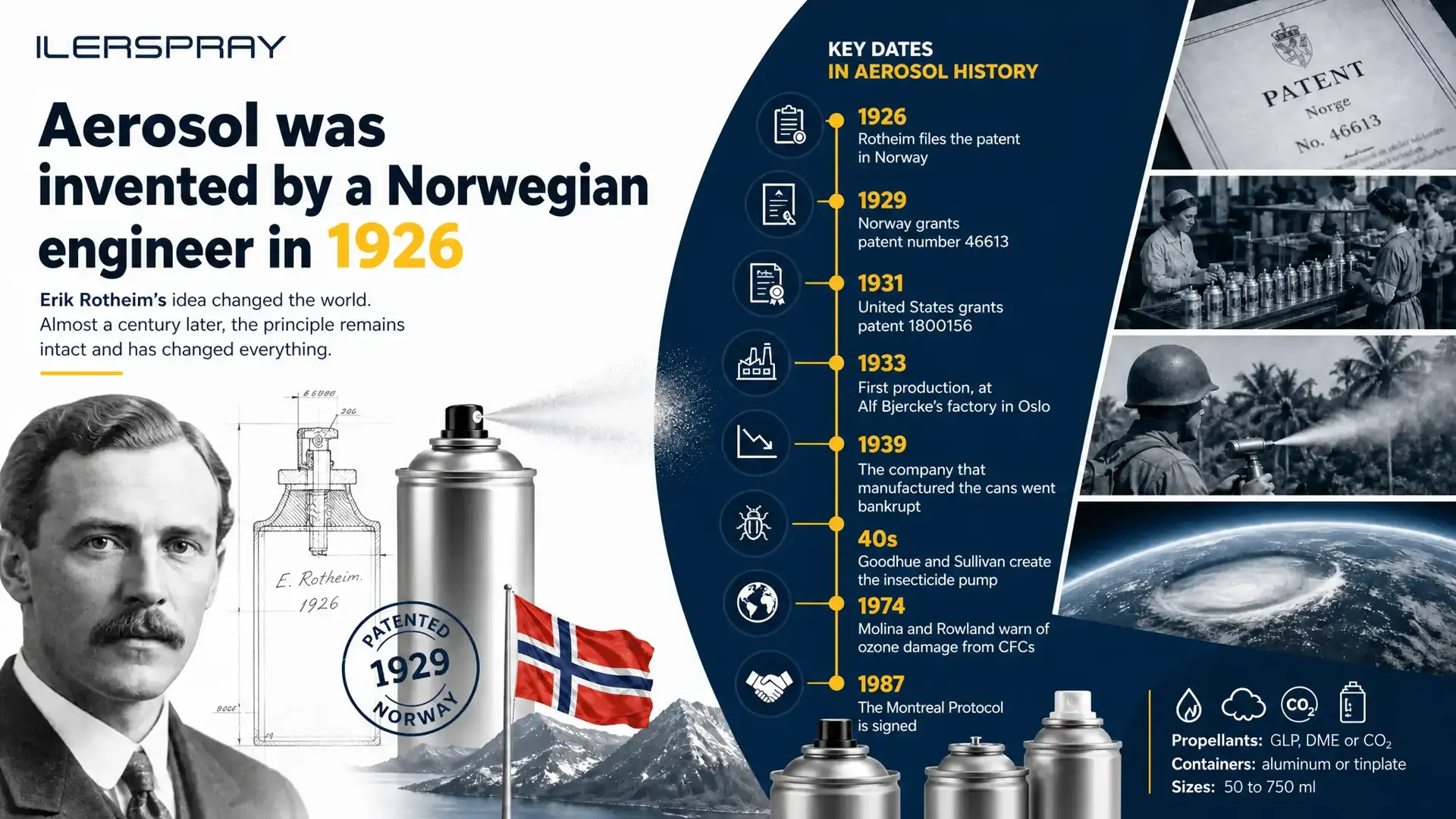
The most significant breakthrough came in the 20s and 30s, when the Norwegian Erik Andreas Rotheim registered various patents for mechanisms that are the closest thing to the aerosols we are familiar with today.

"In 1929, Erik Rotheim, a Norwegian engineer, registered the patent for what would become a milestone, with unprecedented success: the aerosol"

The first commercial production of aerosols took place in Norway, at the factory owned by paint manufacturer Alf Bjerke in Oslo, and later at Mortensen Systems AS. However, both ventures came to nothing before World War II.

How Was the "Bug Bomb" Born During the War?

Until World War II, aerosols did not successfully experience mass production. In 1942, in the Pacific area, more men died from diseases caused by insects than from the war itself.

This fact inspired L.D. Goodhue and W.N. Sullivan, who worked for the United States Department of Agriculture.

Goodhue was a research chemist who in 1935 had the idea of spraying insecticides using liquid halogenated hydrocarbons, although this had never been tested before.

In Easter 1941, Goodhue and Sullivan were driven to find a solution for the Pacific area problem, so they decided to test Goodhue's idea.

The test was a success and in 1942 portable cylinders were developed, which became known as the "bug bomb," to be used by soldiers. 50 million units were manufactured, saving countless lives by protecting troops from mosquito-borne diseases such as malaria and yellow fever.

The Conquest of the Civil Market

After the war, these insecticides became popular with the public, being sold in army surplus stores.

American manufacturers saw the great potential and modified beer containers and replaced the copper valve of the insecticide bomb with a plastic one.

In 1957, production began in Spain, marking the beginning of an industry that would transform the European consumer market.

The 1950s saw the beginning of a long love story between consumers and aerosols, with approximately 70 million aerosols manufactured during this period in Europe.

Aerosols are a consumer good that produces satisfaction for the user - definition by advertisers according to the Asociación Española de Aerosoles

The Golden Age: The 60s and the Aerosol Boom

The 60s were the "boom" of the aerosol industry. A wider range of products was introduced to the market, and consumers confirmed their preference for this revolutionary packaging system.

Unusual products appeared, often short-lived, such as coffee, chocolate, and whiskey concentrates.

Aerosol production in Europe increased dramatically, from 70 million to 1.2 billion units. An unimaginable success!

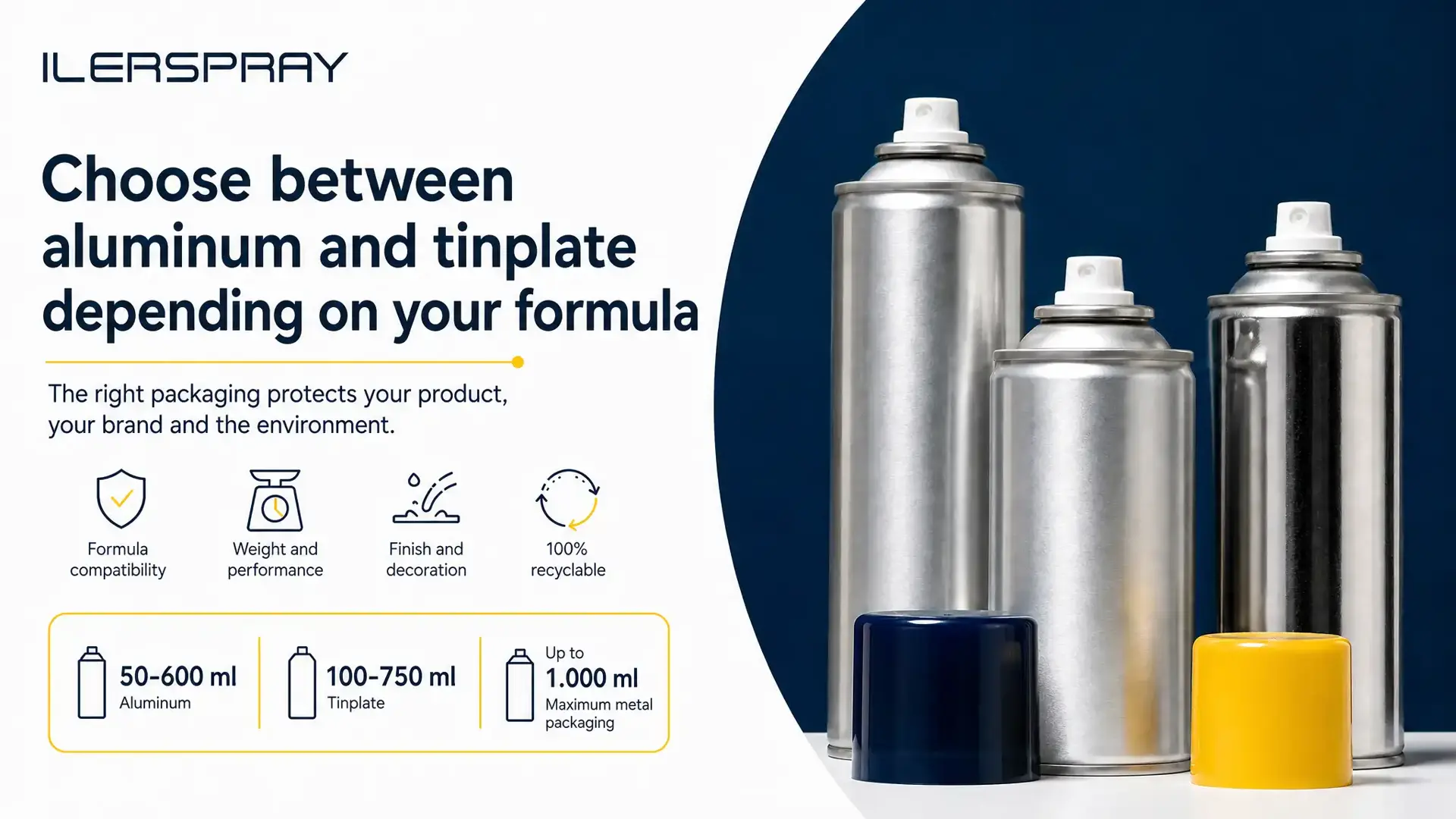
Aerosols were originally manufactured from drawn aluminum cans, although they soon began to be produced as three-piece tinplate containers as well, diversifying production options and reducing costs.

Why Did CFCs Threaten Aerosols?

In the late 70s, a wave of environmental awareness caught the world's attention following the publication of the Molina/Rowland report on the ozone layer.

Aerosols became the priority target for legislators, the world press, and consumer organizations, due to the role CFCs were thought to play in the depletion of the upper ozone layer.

However, the industry responded responsibly.

From 1989, aerosol manufacturers voluntarily stopped using these propellants and currently no aerosol consumer product contains CFCs (except for some specific medical products such as asthma inhalers).

Production was surprising again, reaching a total of 2.2 billion units, an 80% increase in Europe compared to the previous decade.

Renaissance and Consolidation: The 80s and 90s

The industry moved away from CFCs toward alternative propellants. "CFC-free" labeling was introduced in Europe, restoring consumer confidence.

European aerosol production stabilized briefly until consumers returned to their preferred dispensing system because it is practical, easy to use, hygienic, and effective.

During the 80s, European production increased by 35%, reaching 3 billion units.

The 90s saw continuous growth, reaching 4.4 billion units, a 48% increase over the previous decade.

The aerosol was considered one of the great inventions of the 20th century by prestigious media outlets, after consulting scientists, sociologists, and advertisers.

The Aerosol in the 21st Century: Continuous Innovation

Environmental protection was consolidated as a key theme. Recycling and waste minimization occupied a prominent place on the industry's agenda.

Aerosols began to use a significant proportion of metal recycled, demonstrating their commitment to sustainability.

In 1998, more than 10 billion aerosols were manufactured worldwide, with Europe accounting for 44% of total production. Europe has led production since 1982.

According to data from the Federación Europea de Aerosoles (FEA), Spain produced approximately 370 million aerosol units in 2023, representing around 5.8% of the European total.

What Advantages Do Aerosols Offer?

The success of the aerosol lies in its multiple advantages:

Ease of use: immediate application, ideal spraying, exceptional comfort and handling.

Effectiveness: optimal application, maximum performance, and total reliability in every use.

Preservation: guarantee of airtightness, absolute inviolability, hygiene of the content, and maintenance of original properties.

Precision: controlled dosing that avoids waste through overdosing.

Infinite Applications: Beyond Imagination

Currently, a wide variety of products are presented in aerosol format:

Home: air fresheners, cleaners, insecticides

Personal care: deodorants, hairsprays, shaving foams (representing 40% of the market)

Industrial applications: lubricants, paints, automotive products

Food and pharmacy: whipped cream, inhaled medications

The market is distributed across different segments: personal care (40%), home and cleaning (30%), and industrial, automotive, and pharmaceutical (30%).

Are Aerosols Sustainable?

Aerosol containers are manufactured with fully recyclable materials. 75% use tinplate, 24% aluminum, and less than 1% are glass or plastic.

A significant part of the metal used already comes from recycled materials.

Recycling experiences show that it is a fully accepted practice and compatible with selective collection schemes.

In European countries, approximately 1 billion aerosols are recycled using various forms and methods.

"An aerosol is 100% recyclable from day one" - according to industry data

The industry continues to invest in:

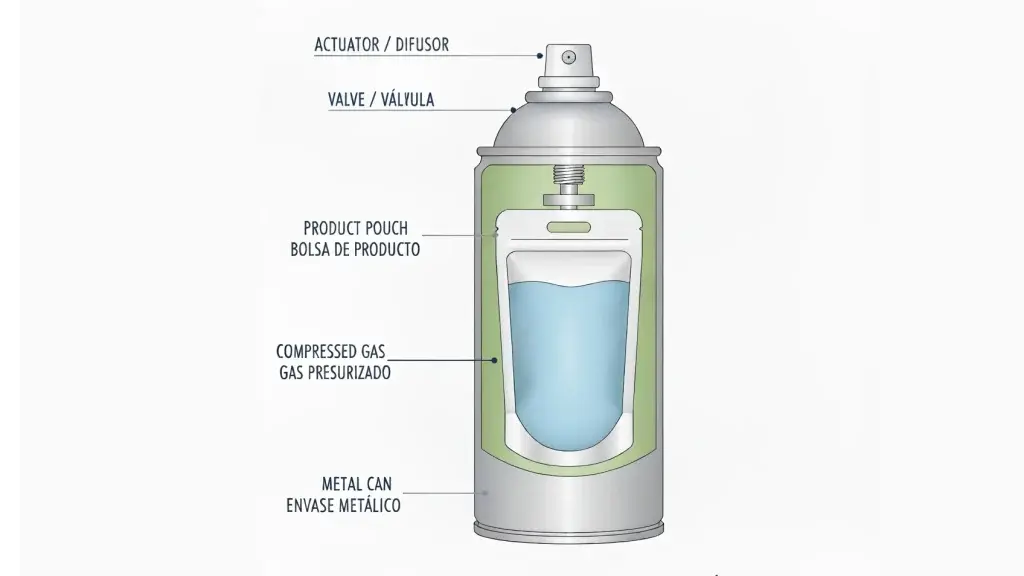
• Eco-friendly and less harmful propellants • Biodegradable formulations • 360° containers • Bag-on-Valve (BOV) systems • Smart dispensers • Biodegradable packaging • 3D printing personalization

ILERSPRAY: Experience and Quality in Aerosoles

In Spain, companies like ILERSPRAY represent the evolution of this industry.

Founded in 2014 in Torres de Segre, Lleida, ILERSPRAY combines decades of experience with constant innovation. Its roots go back to 1968 with the local brand Lebo, which began producing aerosols and gained recognition with automotive maintenance products.

The company offers a wide range of products both under its own brand (APP Range for home and cosmetics, Le-Brill Auto for automotive care, Le-Brill Industry for industrial applications) and contract manufacturing services.

Contract manufacturing and private label services allow companies to market exclusive products without investing in production infrastructure, including:

• Custom formulation • Packaging design • Custom labeling • Comprehensive quality control • Guidance on formulation and presentation

With certifications ISO 9001:2015 and ISO 22716:2017, ILERSPRAY demonstrates its commitment to quality and good manufacturing practices.

The strategic location of ILERSPRAY, less than 2 hours from the port of Barcelona, facilitates both the import of raw materials and export to international markets in Europe, North Africa, and South America.

The global aerosol market is estimated to reach a value of $124.37 billion by 2030, with a compound annual growth rate (CAGR) of 6.10%.

Emerging trends include:

  • 360° containers: which allow spraying at any angle
  • Bag-on-Valve (BOV) systems: which separate the product from the propellant for greater purity
  • Eco-friendly propellants: more sustainable alternatives to traditional propellants
  • Smart dispensers: with technology for precise dosing
  • Biodegradable packaging: research into fully compostable materials
  • 3D printing personalization: for unique designs and short runs

Conclusion: An Invention that Changed Our Lives

From that "bug bomb" in the Pacific to today's sophisticated systems, the history of the aerosol is a story of innovation, adaptation, and success. This revolutionary invention has simplified household tasks, improved personal hygiene, facilitated industrial applications, and saved countless lives.

The aerosol industry is characterized by its sense of innovation, creativity, continuous improvement, and safety.

Do you need aerosol solutions for your company?

At ILERSPRAY we have more than 50 years of accumulated experience in the sector, offering everything from custom formulation to complete manufacturing under your brand.

Contact us at +34 973 78 46 55 or visit www.ilerspray.com and discover how we can help you be part of this fascinating story.

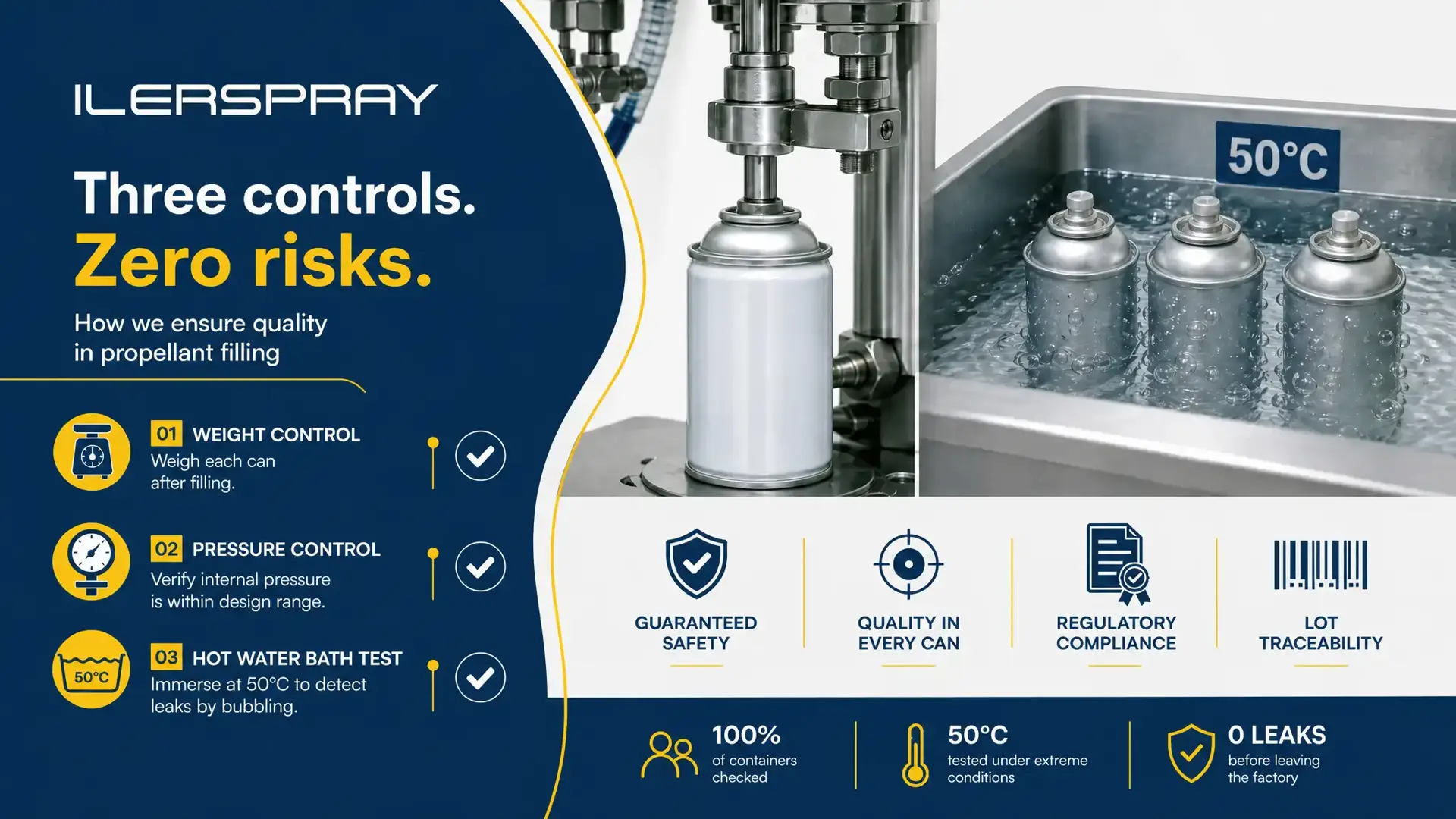
"The quality of an aerosol is decided in the formulation. Filling only executes it — or betrays it."

— Ilerspray technical team

Ready when you are

Do you have a project in mind?

Contract manufacturing, private label, distribution, or a technical question. Write to us and we will respond with real industrial expertise.