How to Choose the Valve and Actuator Your Aerosol Needs
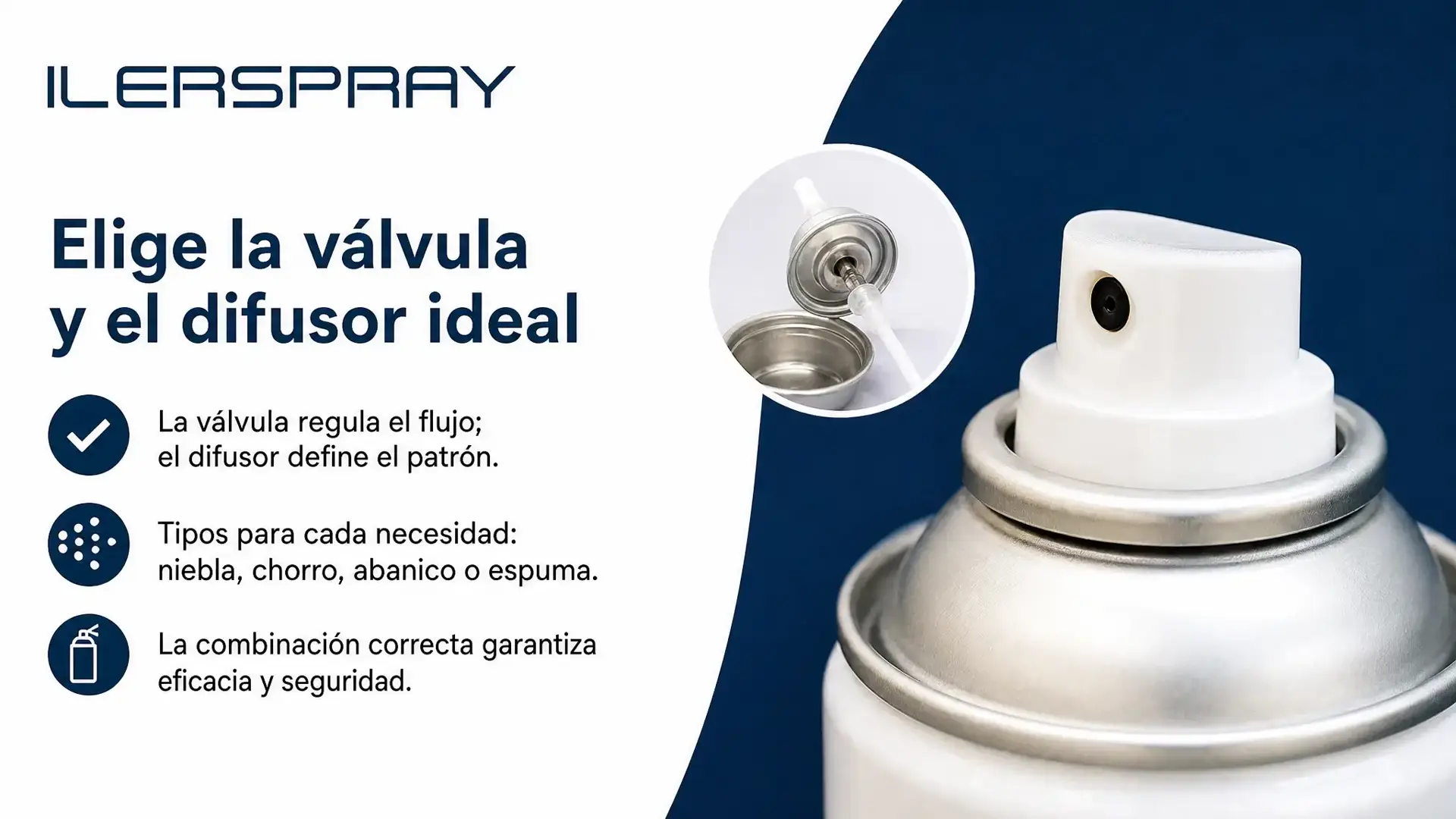
The valve seals the aerosol and controls how much product comes out; the actuator, the button you press, decides the shape of the output: mist, jet, fan or foam. They are chosen together and according to the formula: a standard valve for use with the can upright, a 360 valve if the product must work in any position, or a metered valve if each press must release a fixed dose.
What Is the Nozzle on a Spray Can Called?
The nozzle on a spray can is called the actuator, also known as the button, spray head or nozzle. The European Aerosol Federation (FEA) describes it as the part that controls the angle, amount, shape and fineness of the spray, and counts it among the four parts of every aerosol, together with the container, the valve and the cap.
The actuator does not work alone: pressing it pushes down the valve stem, which opens the way for the product. That is why changing the actuator may call for a different valve, and the other way round.
The Parts of an Aerosol Valve
The valve is crimped onto the opening of the can and keeps it virtually airtight until it is pressed. Its parts are always the same:
| Part | Function |
|---|---|
| Valve cup | Closes the can opening when crimped |
| Gasket | Seals the stem while the valve is closed |
| Stem | Opens the way when the actuator is pressed |
| Spring | Pushes the stem back and closes the valve |
| Housing | Holds the spring and meters the product flow |
| Dip tube | Draws the product up from the bottom |
For cans with a one-inch opening, the dimensions of the valve cup are standardised in EN 14848, one of the standards in the FEA list of standards. The same list includes methods to measure discharge rate and to evaluate spray patterns.
What Are the Different Types of Aerosol Can Valves?
Valves differ mainly by position of use and by how they dose:
| Valve | How it works | Typical use |
|---|---|---|
| Standard | With dip tube, can upright | Most sprays |
| Inverted | No dip tube, can upside down | Foams, line marking |
| 360 | In any position | Application at awkward angles |
| Metered | Fixed volume per press | Pharmacy, automatic air fresheners |
| Total release | Locks open and empties the can | Total release insecticides |
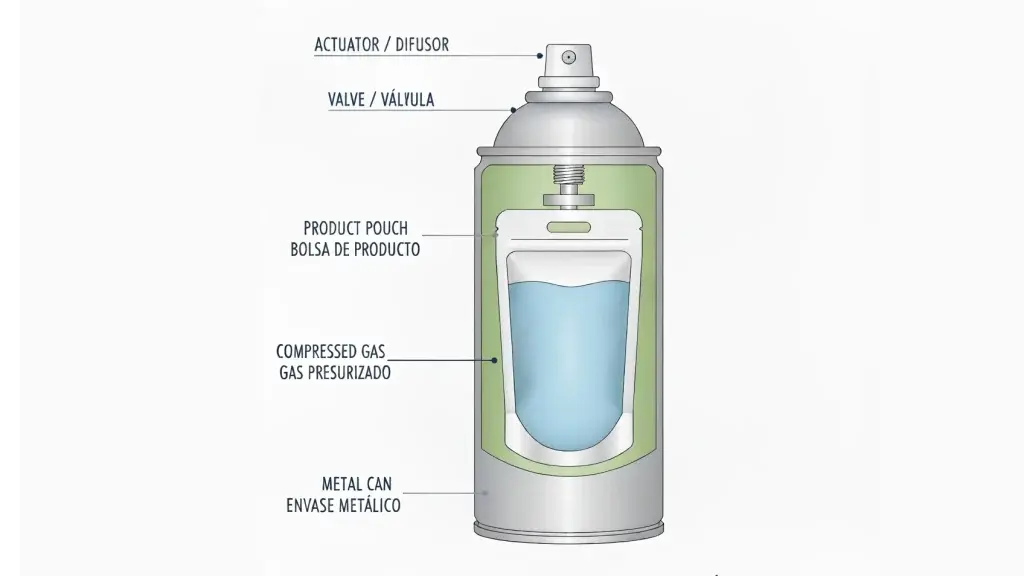
| Bag-on-valve | Product in a bag, gas outside | Sensitive formulas |
Two more details change how a valve behaves. It can be male, with the stem on the valve itself, or female, with the stem in the actuator, which is common in paint. And some have a vapour phase tap, a small hole that mixes propellant vapour with the product to make the spray finer and lower the flow rate.
What Is a 360 Valve?
A 360 valve is one that sprays in any position, with the can upright, tilted or upside down. A standard valve stops delivering product when the can is turned over, because the dip tube is out of the liquid and only gas comes out; the 360 valve adds a second inlet, usually controlled by a ball, that takes in product when the can is inverted.
It is used for products applied at awkward angles: lubricants for mechanisms, insecticides for corners and under furniture, or sun protection sprayed onto the back. Bag-on-valve achieves the same effect another way, because the gas presses on the bag equally in every position.
How to Choose the Valve and the Actuator
The starting rule is that the product and its use come first. The formula decides the materials of the gasket and housing, which must withstand it without swelling or contaminating it; the use decides the working position and the shape of the output:
| Actuator | Output | Typical use |
|---|---|---|
| Fine spray | Wide mist | Air fresheners, cosmetics |
| Jet | Concentrated stream | Technical cleaners at a distance |
| Fan | Flat spray | Paints and varnishes |
| Foam | Foam | Mousses and cleaning foams |
| With extension tube | Directed stream | Lubricating hard-to-reach points |
The type of content and the aerosol's use are key factors in the selection of the actuator.
The regulations set conditions too. The EU Aerosol Dispensers Directive 75/324/EEC requires the valve to keep the aerosol virtually airtight in normal storage and transport and to be protected against accidental opening, for example with a protective cap.
Ilerspray decides the can, the valve and the actuator together with the formula: we fit any 1-inch valve on the market with its actuator, and the laboratory produces samples to check the whole set before manufacturing. If you are choosing for your own aerosol, try more than one valve and actuator combination on the real formula before fixing the pack; in our aerosol contract manufacturing that test is part of the samples.