Every Aerosol Is Tested at 50 °C Before It Leaves the Factory
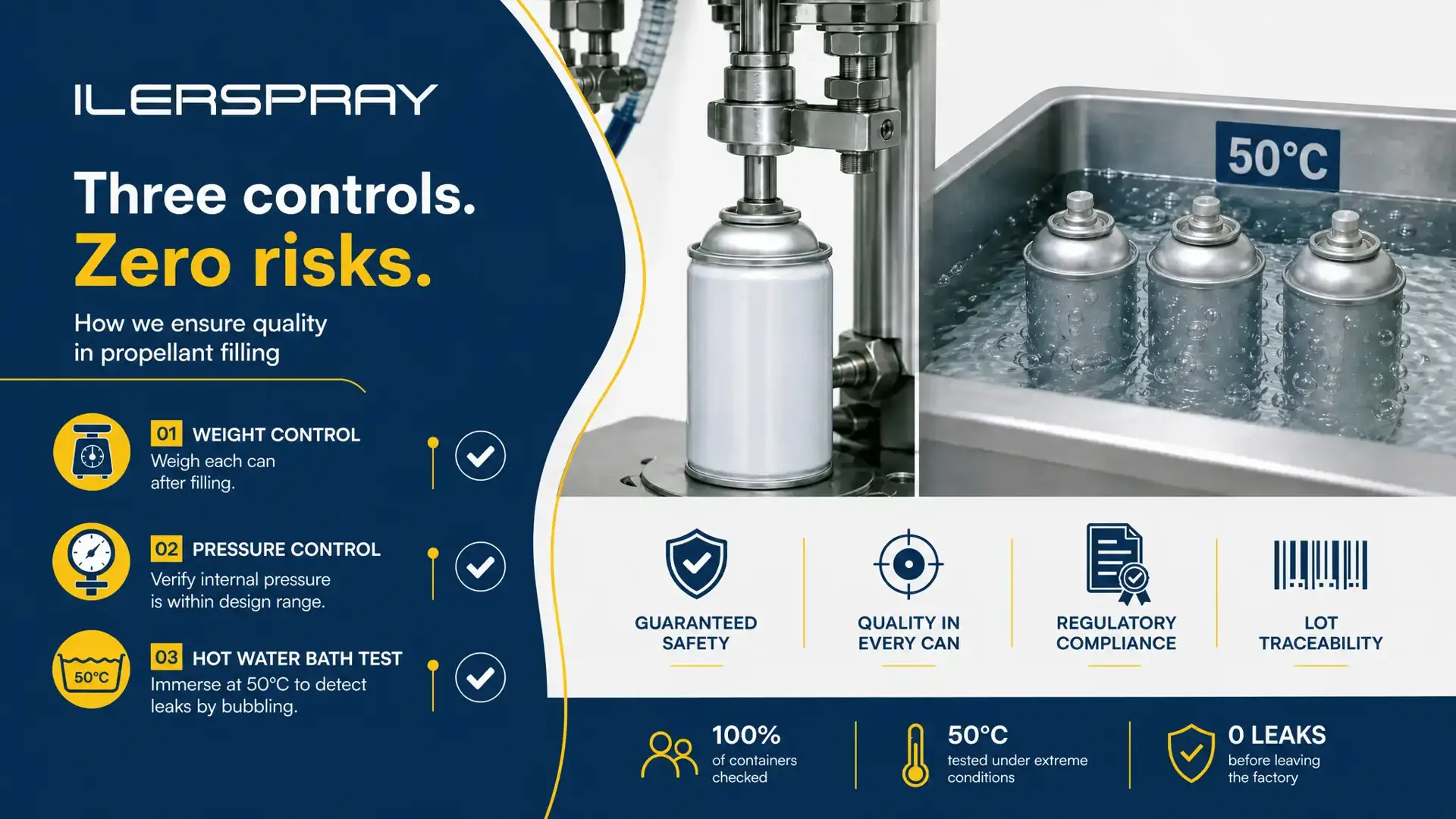
A filled aerosol goes through three checks before it leaves the factory: check-weighing of every can to confirm the dose of product and propellant, an inspection of the crimped valve, and a final test required by law. In that test each unit is heated to the pressure it would reach at 50 °C, usually in a hot water bath, and any can that deforms or leaks is rejected.
What Checks Does an Aerosol Go Through at the Factory?
Filling an aerosol has three critical moments: dosing the concentrate, crimping the valve onto the neck of the can, and charging the propellant through that already sealed valve. Each quality check watches one of those moments, and none replaces the other two.
| Check | What it detects | When it is done |
|---|---|---|
| Check-weighing | Product or gas dose out of range | After filling, in line |
| Crimp and valve | Valve badly seated or badly sealed | After crimping |
| Final pressure test | Leaks, distortion and burst risk | On every filled can |
| Spray test | Blocked actuator or irregular output | When fitting the actuator |
Check-weighing is the dosing control: a can with too little gas sprays poorly and can lose pressure before it is empty, and one with too much gas works at a pressure it was not designed for. The final test is the only check that puts the sealed can through a harsher condition than it will meet in a warehouse or a lorry in summer.
What Is the Hot Water Bath Test?
It is the final test that European aerosol dispenser law requires on every filled can, not on a sample. Directive 75/324/EEC describes it as follows: each filled aerosol dispenser is immersed in a hot water bath, at a temperature and for a time that bring the internal pressure to the level its contents would reach at a uniform temperature of 50 °C.
The acceptance rule is simple and leaves no room for interpretation. Any can showing visible permanent distortion or a leak is rejected and does not leave the line. The test checks the tightness of the seal and the burst resistance of the can at the same time.
💡 Technical tip: a can that passes check-weighing but bubbles in the bath almost always points to a faulty crimp, not a dosing problem. Isolate the batch and check the crimping head setting before filling any further.
How Is Leak Tightness Checked Without a Water Bath?
With an authorised alternative method. Some products cannot withstand the heat of the bath, and Directive 2008/47/EC opened the door to other final tests that give the same assurance:
Technological progress has made possible alternative test methods for the final assessment of aerosol dispensers for burst resistance and leak tightness, which guarantee the same level of safety.
The law allows two families of alternative methods: other heating systems that reach the same pressure and temperature and detect leaks and distortion with the same precision, and cold final test methods. Both need prior authorisation from a competent authority, and whoever places the aerosol on the market must keep that authorisation and the technical file describing the method. Aerosols whose contents change pressure after filling must be tested cold.
The Pressure and Fill Limits the Law Sets
Quality control on filling does not only look for leaks: it also confirms that the dose respects the limits the law places on a metal container. A properly dosed aerosol leaves room for the gas to expand with heat, which is why the liquid phase has a ceiling.
- Liquid phase at 50 °C
- at most 90 % of net capacity
- Flammable liquefied gas
- up to 12 bar at 50 °C
- Non-flammable liquefied gas
- up to 13.2 bar at 50 °C
- Non-flammable compressed gas
- up to 15 bar at 50 °C
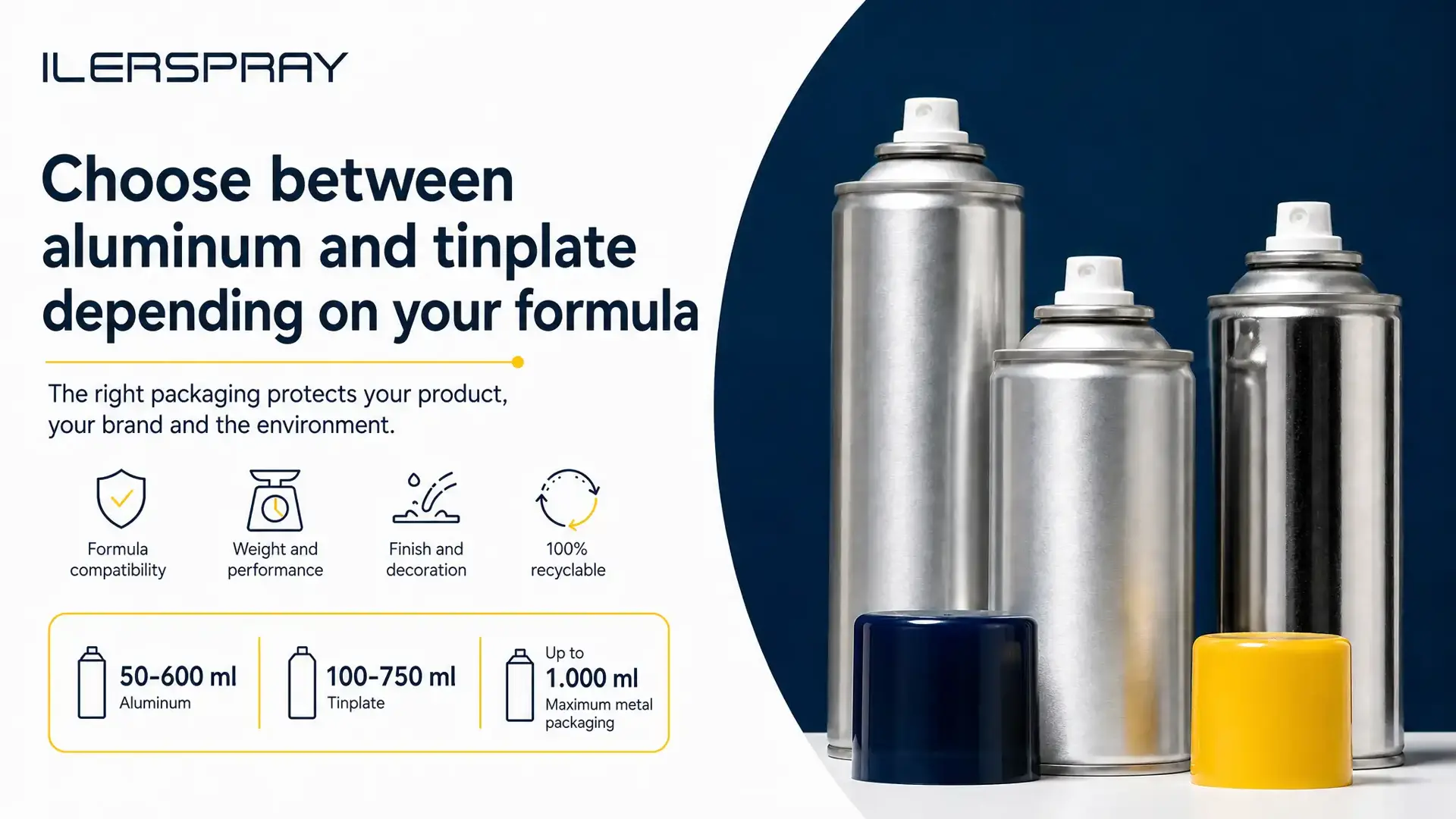
- Capacity of a metal container
- 50 to 1,000 ml
These are the Directive's values for metal containers. A formula that exceeds the permitted pressure at 50 °C with its propellant cannot be fixed on the line: it goes back to the laboratory to adjust the mix or the container.
What to Ask Your Manufacturer About Quality Control
Ask which final test applies to your product, the water bath or an authorised alternative, and how each batch is recorded. A serious manufacturer documents the traceability of every run: which batch of cans, valves and propellant was used, so an incident can be isolated without recalling the whole production.
At Ilerspray we produce with batch-by-batch quality control under an ISO 9001:2015 certified system, and we check every can with a hot water bath and a pressure check. If you are weighing up who should make your aerosol, our aerosol contract manufacturing page explains how we work from brief to pallet.